
The Guiro – Everything You Need To Know

Latin music wouldn’t sound the same without the Guiro, which is a very distinctive percussion instrument.
The güiro has Indigenous roots in the Caribbean. The instrument you hear today can be made of gourd, wood, metal or plastic.
It is fairly easy to play, it’s also light and it fits perfectly in a human hand. Most of all, it adds a typical Latin flavor to music like no other instrument can do.
Contents
How to Play the Guiro
This great video below explains how a Guiro is played. These produce an interesting and iconic sound.
These instruments have also often been sampled and used in many different genres of music.
Different Types of Guiros
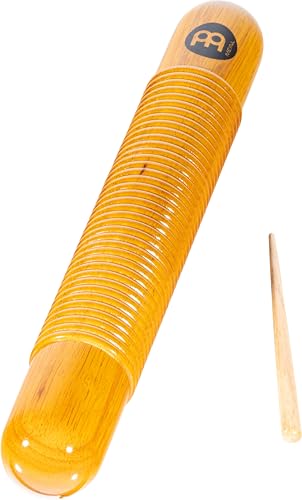


Start with a wood güiro for a short, dry sound, or try the LP243 if you want to switch between the two included scrapers. The metal LP307 is a larger instrument with a sharper sound for merengue. The frog rasps have a different use: stroke the ridges from tail to head for a croak-like effect.
Where did the Guiro Come From?
Scraped instruments have taken many forms across the Americas and Africa. The Puerto Rican gourd güiro belongs to a different tradition from the bone rasps of Mesoamerica.
The Smithsonian’s Puerto Rican collection connects the traditional gourd güiro with the Taíno people. Nineteenth-century examples from Puerto Rico and Cuba show how widely the instrument was played across the Caribbean.
What is a Guiro Made Of?
A traditional güiro is made out of hollowed gourds and cut with parallel notches on one of its sides. The name, derivated from the ancient Maipurean language, indicates the fruit of the guira (the Calabash tree), the main material Tainos used to build the instrument.
Modern guiros keep the structure invented by the Taino people, although they are most often made of wood, metal, plastic, or fiberglass. They still have their typical cylindrical shape with cuts on one side.
Its peculiar ratchet sound is produced by scrapping the notched side with a stick called scraper, while its hollow body is held in the other hand.
Where is the Guiro Used?
Cuts placed at different distances from one another produce slightly different sounds. It is also possible to variate the rhythm by alternating the direction and the length of the strokes.
Its distinctive Latin sound makes the guiro a recurring presence in many different South American genres, from folk to contemporary dance music.
You can hear related scraped percussion across the Caribbean and Latin America. For Dominican merengue, the metal güira supplies a bright, steady rhythm. The Cuban guiro is used in the traditional genre called danzòn.
In Puerto Rico, guiros are used in jibaro, plena, seis, and danza music. In the Yucatan Peninsula, the locals use guiros to accompany the traditional Mayan dances called mayapax and jarana. In Panama, guiros are used as part of the merjorana folk dance.
Guiros are sometimes featured in classical music scores too. Stravinsky, for example, included the use of guiros in his work The Rite Of Spring. Another example of this kind is the Latin-American Symphonette by Morton Gould.
Even some rockstars also fell in love with this South American instrument. We can clearly distinguish the guiro in the famous David Bowie hit The Man Who Sold The World, in Rolling Stones’ Gimme Shelter, in Under the Boardwalk by The Drifters, or in So You Want To Be A Rock’n’Roll Star by the Byrds.
Similar Instruments
The South American musical culture is colorful and variegated, so many different instruments are part of the tradition.
A lot of percussion instruments originating in this area resemble the guiro, such as the Brazilian reco-reco, made of wood or metal and often present in the samba, or the Colombian guacharaca. Another instrument very similar to the guiro is the scratcher, used mainly in Trinidad and Tobago.
Conclusion
In conclusion, this simple percussion instrument has a long history. It is also very versatile and fun to play. Most of all, it can add that peculiar Latin touch to virtually any song you play!
Featured image credit: “File:Le Guiro 09082011.jpg” by Rog01 from France is licensed under CC BY-SA 2.0




