
The 12 Best Electronic Drum Sets (2026) – Buyer’s Guide and Reviews
Electronic drum sets have improved a lot in recent years. Professional sets have reached a whole new level of quality, while budget kits have become very playable.
There have been welcome improvements to entry-level electronic drum sets, with mesh heads and better drum modules coming as standard. However, you still have to choose wisely!
After reviewing many different sets, my top pick is the Roland TD516 because it combines excellent digital snare, ride and hi-hat pads with an expandable module and a very solid playing setup.
The best affordable electronic drum set is the Alesis Nitro Max, which includes all mesh heads and a very good drum module for this price range.
I wrote this guide to give you a round-up of the best sets available, including both beginner and pro options. Electronic drum sets are amazing for live performances, quiet practice, recording, and much more.
Contents
- The Best Electronic Drum Sets (2026)
- 1. Roland TD516
- 2. Alesis Nitro Max Kit
- 3. Alesis Strata Prime
- 4. Roland TD-07DMK
- 5. Alesis Nitro Pro
- 6. Alesis Nitro Ultimate
- 7. Yamaha DTX6K-X
- 8. Roland TD316
- 9. Roland VQD106
- 10. Roland TD716
- 11. Roland VAD516
- 12. Roland VAD716
- What Are the Best Electronic Drum Set Brands?
- Electronic Drum Head Types
- Quiet Practice with Electronic Drums
- How Electronic Drum Sets Work
- Electronic Drum Accessories
- How to Record Electronic Drums
- Learning to Play Drums on an Electronic Drum Set
- Using an Electronic Drum Set for Live Shows
- Many Different Sound Options and Samples
- Are electronic drum components compatible with each other?
- Summary
- Alesis Nitro Max
- Roland TD516
The Best Electronic Drum Sets (2026)

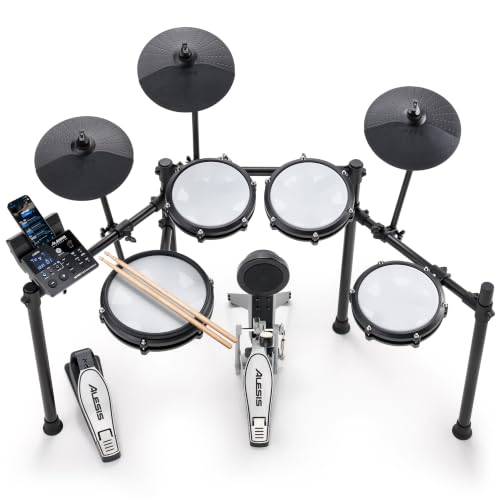

These four sets are my top picks based on value, sound quality, build quality, and features.
My runner-up entry-level kit is the Roland TD-07DMK, which offers a compact all-mesh layout and a more capable module, but it is more of an investment than the Nitro Max.
For a larger kit, my main runner-up is the Alesis Strata Prime, which offers plenty of drums, detailed BFD sounds and extensive editing from its touchscreen module.
You can output the audio from electronic drum sets to headphones or a separate drum amplifier.
1. Roland TD516
The Roland TD516 is my top pick for a number of reasons. It offers a high-quality deep snare pad, a large responsive ride cymbal pad, and digital hi-hats that respond to the details of your playing.
The snare works extremely well with ghost notes, rim shots, and side-sticking. Roland massively excels at triggering and modeling technology, and that shines through in this kit.
Pros
- Fantastic digital snare, ride and hi-hat pads.
- Expandable V51 drum module with a detailed sampled sound library.
- Triple-sensor tom pads and a responsive KD-12 kick tower.
- Works extremely well as a MIDI controller for VST plugins.
Cons
- Stage presence is not great compared with full-shell acoustic-design kits.
- The flagship PD-14DSX snare is reserved for higher-end models.
- The kick pedal, hi-hat stand and snare stand need to be purchased separately.
The hi-hat pads are designed to be used with a real hi-hat stand, which replicates the feeling of playing on an acoustic set quite a lot.
The V51 module is the main step forward from the TD-27KV2. Its onboard multi-sampled sounds were developed with DW, and you can add sound content through Roland Cloud. The built-in kits work without a subscription; extra content may require a subscription or a separate purchase.
The toms have grown to 10, 10 and 12 inches, with three sensors in each pad. The KD-12 kick tower is designed for single or double pedals. Its playing surface is 7.5 inches, so the model name should not be confused with the head size.
Also, the module allows you to extend the kit with other drum and cymbal pads.
Not everyone is in the position to rock out with an acoustic kit because of noise constraints. If you’re missing the feel of an acoustic kit and don’t have quite the budget for the most expensive electronic drum sets, then this is a great option.
It doesn’t quite have the stage presence of the Strata Prime or the Roland VAD range, but if that’s not a major issue for you then this is certainly one to consider.
2. Alesis Nitro Max Kit
The Alesis Nitro Max is the budget pick from the hugely popular Alesis Nitro range. Alesis originally set a new standard for entry-level kits with their original Nitro kit, followed by the Nitro Mesh kit.
Pros
- Affordable, quality, entry-level electronic drum kit
- 32 onboard kits with 16 kits for user creation
- 440 onboard drum and percussion sounds
- Bluetooth connectivity
- Compact 4-post aluminum rack system
Cons
- Lightweight rack is a compromise compared with the Nitro Pro’s steel rack
- All single-zone cymbal pads
This budget electronic drum kit brings so much value to the table considering the affordable price. It features an all-mesh configuration with a 10″ dual-zone snare and three 8″ single-zone tom pads.
In terms of cymbal pads, it has a 10″ hi-hat, a 10″ crash with choke, and a 10″ ride.
The Nitro Max is better in several ways than its predecessor. It has a larger snare drum pad, a larger collection of sounds and kits (440 onboard sounds), and comes with a 90-day subscription to Drumeo.
On a more detailed note, the Nitro Max has a total of 440 sounds, 32 premium drum kits, and 16 kits for custom user creation. Plus, it has 60 built-in play-along tracks, 60 free Melodics lessons, and a Drumeo subscription.
All in all, this kit, equipped with a 4-post aluminum rack system, keeps the setup light and compact. It also comes with all the necessary connection cables, a power supply, drumsticks, and a drum key.
3. Alesis Strata Prime
The Alesis Strata Prime is an extensive set with an absolute ton of features. It’s worth considering if you want a large kit and detailed onboard sounds without moving to a flagship Roland.
Pros
- BFD multi-sampled sounds run directly on the module.
- A large touchscreen makes sound editing much easier.
- Four dual-zone mesh toms and a full-size kick drum.
- Three-zone cymbals respond around their full playing surface.
- Stand-mounted magnetic hi-hat system.
Cons
- A large setup that needs plenty of space.
- Two crash cymbals rather than the Strike Pro SE’s three.
- The kick pedal and hi-hat stand need to be purchased separately.
It has all mesh pads and it works very well with double bass drum pedals. The 14-inch snare, four toms and 20-inch kick give it plenty of size and presence.
The Prime module is the biggest reason to choose this kit. Its BFD sound engine lets you adjust the balance of individual microphones and shape the kit’s sound on a 10.1-inch touchscreen. You don’t need to run a computer to use its onboard library.
The 18-inch ride and two 16-inch crashes have three playing zones and 360-degree triggering. The 14-inch hi-hat uses a magnetic controller on a real hi-hat stand.
If you want to go all in and buy a large electronic drum set, then the Strata Prime is well worth considering. However, it takes more space and a bigger investment than the Nitro kits in this guide.
The TD516 has a more compact layout and Roland’s digital snare, ride and hi-hat. The Strata Prime gives you more drums and extensive sound editing. It’s definitely a matter of preference.

4. Roland TD-07DMK
The Roland TD-07DMK is an entry-level electronic drum set that could seriously be used as a long-term practice option.
Pros
- Great mesh heads.
- Compact layout for home practice.
- Bluetooth audio for playing along with music.
- USB audio and MIDI recording.
Cons
- Relatively small snare and tom playing surfaces.
- Rack-mounted kick pad rather than a separate kick tower.
- Kick pedal and drum throne are separate purchases.
It contains four Roland tunable mesh pads, which are perfect for learning to play on. The rack-mounted kick pad also fits double bass pedals if needed, which is a fantastic benefit.
The TD-07 module is the main improvement over the TD-1DMK. It gives you more sound editing, built-in coaching and Bluetooth audio, as well as USB audio and MIDI for recording on a computer.
The drum module is very good for starters. It’s more limited than mid-level and high-end Roland drum brains, but beginners simply wouldn’t need the majority of these extra features.
The toms are single-zone, and the small cymbals do not give you a separate physical ride-bell zone. Those are the main compromises of this compact set.
If you can spend a bit extra compared with the most affordable beginner kits, then this set is well worth considering.
Please note that the kick pedal is sold separately, so make sure to check the bundle contents before you buy.
5. Alesis Nitro Pro
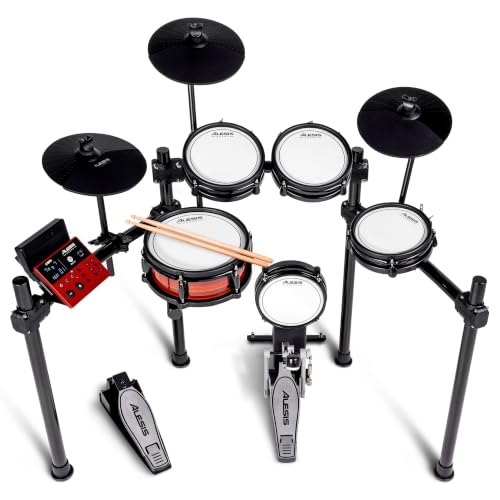
The Alesis Nitro Pro electronic drum set is impressive and it packs a lot of features for its affordable price tag. It’s a useful step up from the Nitro Max if sturdier hardware and double-kick practice are priorities.
Pros
- Good quality mesh pads.
- Dual-zone snare and tom pads.
- Steel rack and an 8-inch mesh kick tower.
- Uses a proper kick pad, instead of an electronic pedal.
- Bluetooth audio and MIDI-over-USB connection.
Cons
- Relatively small mesh heads, but still playable.
- Single-zone cymbals limit articulation.
- The sound module is still from the affordable Nitro family.
This kit uses an actual kick pedal and pad, which retains the correct motion of playing a real bass drum. The mesh kick tower is designed to accommodate double pedals.
The Nitro Pro includes a 10-inch dual-zone snare and three 8-inch dual-zone toms. Its steel rack and mesh kick are the main hardware improvements over the Nitro Max.
The module includes 32 preset kits, 16 user kits, 440 sounds, play-along tracks and a metronome. Bluetooth audio lets you play along with music, while USB MIDI can trigger drum software on a computer.
That ticks the main boxes for an entry-level drum module. However, the Pro’s advantages are mainly in its hardware and playing layout, so it isn’t an essential upgrade for someone who already owns a Nitro Max.
Note: You will need to purchase a drum stool/throne and headphones separately with this unless you buy it in a special bundle.

6. Alesis Nitro Ultimate
The Alesis Nitro Ultimate Electronic Drum Set really offers a lot of features and value for its price tag. It’s a step above entry-level electronic drums, particularly if you want a hi-hat that moves on a real stand.
Pros
- Tunable mesh snare and tom heads.
- Stand-mounted moving hi-hat.
- Two crash cymbals and a dual-zone ride.
- Mesh kick tower suitable for double bass drum pedals.
- Bluetooth audio for playing along.
Cons
- Hi-hat stand is a separate purchase.
- Small tom pads and straightforward module controls.
- Ride has no separate physical bell zone.
The drum heads, including the kick pad, are tunable just like regular acoustic heads. The snare and tom pads are all dual-zone, which adds more playing options.
The moving hi-hat is the biggest reason to choose this set over the Nitro Pro. It sits on a conventional hi-hat stand, so opening and closing it feels more familiar than using a detached floor controller.
It also adds a second crash and dual-zone cymbals. The 10-inch snare and three 8-inch toms keep the setup relatively compact, although the small floor tom is a compromise.
The Nitro Ultimate module has 52 kits and over 640 sounds, along with Bluetooth audio and USB MIDI. It gives you plenty to practice with, but the Strata models offer much deeper onboard sound editing.
As you might expect, the kit also has MIDI connectivity so that you can connect it to a PC or other audio equipment to trigger and record external sounds.
This kit packs a lot of value for its price tag. It’s a good option for a beginner to intermediate drummer who wants a more natural hi-hat setup.

7. Yamaha DTX6K-X
After quite a long time with Yamaha not releasing new electronic drum sets into the market, they released the DTX-6 series in late 2020. The most affordable option from this range is the Yamaha DTX6K-X.
It includes a TCS snare head, Yamaha’s silicone alternative to mesh.
Pros
- The TCS head on the snare drum is the biggest benefit of this kit.
- The module is good, with nice sounds.
- Good Yamaha build quality
Cons
- A bit pricey for a kit with rubber Tom pads
- The KP-65 bass drum pad is relatively small
- Mounted hi-hat and standalone pedal
TCS heads are textured cellular silicone heads that are designed by Yamaha. Their rebound feels different from mesh, so the choice is partly a matter of preference.
The Yamaha DTX6K-X only comes with a TCS head as part of the snare pad, the rest come as rubber. This is certainly a disadvantage because I would still recommend that you get a kit with all mesh heads in comparison to a kit with a single TCS snare drum and rubber tom pad combination. However, if your preference is to have a great quality snare pad then this is still an option to consider.
The DTX6 series also includes a nice module, where you can control effects. The snare and ride cymbal pads are both 3-zone, while the tom pads are single-zoned.
The kick drum pad is the KP65, which Yamaha has had in the market for many years. A kick pedal is a separate purchase. It’s a decent kick tower and would be compatible with most double bass drum pedals.

8. Roland TD316
The TD316 pushes what you can get from a mid-level electronic drum set. The V31 module brings Roland’s current sampled sound engine to a smaller kit, with a moving hi-hat and two crashes as standard.
Pros
- Large snare pad with positional sensing.
- Expandable V31 module.
- All mesh heads.
- Hi-hat uses a real stand.
- USB audio recording and one digital-pad upgrade input.
Cons
- No digital pads included.
- Only one digital trigger input.
- Hi-hat stand and kick pedal are separate purchases.
Roland’s V-Drums technology really shines in this kit, and it has many features that make it feel like playing on an acoustic drum set.
The 12-inch PD-12P snare has three sensors and positional sensing. The revised tom pads give you an 8, 8 and 10-inch layout, while two 12-inch crashes and a 14-inch ride offer more cymbal options than the TD-17KV2.
The VH-10 hi-hat works on a real hi-hat stand. This is a useful improvement over the TD-17KV2’s mounted cymbal and detached controller.
The V31 module shares its sound platform with the V51 and V71. It has Bluetooth audio, Wi-Fi sound downloads, sample import and USB audio/MIDI recording. Built-in sounds work without a Cloud subscription; extra content has separate access options.
Compatible with double bass drum pedals, the KD-10 kick drum pad was designed to fit two beaters. So fans of double-bass drum pedals will be happy with this!
If you have a bigger budget, the TD516 adds a full set of digital snare, ride and hi-hat pads. The TD316 is still a strong option if you want a good playing layout without that extra investment.

9. Roland VQD106
The Roland VQD106 is the kit to consider if physical playing noise is your biggest concern. Its Quiet Design pads, isolated rack feet and pedal bases are designed to reduce tapping noise and vibration through the floor.
Pros
- Pads and hardware designed for quieter practice.
- Isolation built into the rack and pedal bases.
- Mesh snare and tom pads.
- TD-07 module with Bluetooth audio and USB audio/MIDI.
Cons
- A premium over conventional beginner practice kits.
- Single-zone toms and no separate physical ride-bell zone.
- Detached hi-hat controller rather than a real stand.
Electronic drums are not silent. Headphones control the sound from the module, but the pads and pedals still make physical noise. This kit tackles both the pad sound and the vibration caused by pedal use.
The trade-off is that the TD-07 module and pad zones are simpler than those on the mid-level kits in this guide. You’re paying for a quieter playing setup rather than flagship sounds or digital pads.
If you’re really aiming for a very quiet experience, you may still need to consider the room and floor underneath your kit. The isolation hardware helps, but it cannot guarantee that a neighbor will hear nothing.
If you’re a fan of Yamaha’s TCS feel, the DTX6K3-X remains an alternative with TCS snare and tom pads. It should not be assumed to be quieter than a kit specifically designed to reduce impact noise.
Make sure you choose the complete VQD106 kit. The VQD106PADS version does not include the sound module. A kick pedal and drum throne are separate purchases.

10. Roland TD716
The TD716 is Roland’s flagship rack-based offering. It pairs the V71 module with advanced digital pads, four toms and a substantial kick drum.
Pros
- Detailed sampled sounds and extensive editing.
- Digital snare with a physical throw-off and tension knob.
- Digital hi-hat and ride pads.
- Four-sensor tom triggering.
- Multi-channel USB audio recording and direct outputs.
Cons
- Pricey!
- A large rack setup that needs plenty of room.
- Kick pedal, hi-hat stand, snare stand and throne are separate purchases.
This electronic drum set is perfect for both home practice and live performances.
The PD-14DSX snare builds on Roland’s digital triggering with a throw-off lever and tension knob. The digital VH-14D hi-hat and CY-18DR ride complete a very expressive playing setup.
The four toms use PD-10X and PD-12X pads with four sensors. The KD-18 kick has the presence of an acoustic bass drum, while the MDS-STG2 rack keeps the drums and cymbals firmly positioned.
The V71 module enables you to play your own imported samples and multi-track record with your digital audio workstation, such as Reaper, Ableton or Cubase. This makes it fantastic for pro drummers who are serious about their craft.
It also brings a new multi-sampled library developed with DW, a color display and wireless sound expansion. You can play its built-in kits without an ongoing subscription.
We’re just scratching the surface of what the V71 can do here. If you want a flagship playing and recording setup, then this electronic drum set is well worth considering.

11. Roland VAD516
The Roland VAD516 offers the presence of an acoustic drum set with the flexibility of electronic drums. Its full-size wood shells make it a strong choice if stage appearance matters to you.
Pros
- Looks amazing.
- Full-size wood shells and a 20-inch kick.
- Advanced digital snare, hi-hat and ride.
- Expandable V51 drum module.
Cons
- Pricey!
- Takes more room than a compact rack kit.
- Kick pedal, hi-hat stand, snare stand and throne are separate purchases.
This set looks absolutely fantastic, and people would be excused if they were to assume that this is actually an acoustic drum set!
It includes a 14-inch PD-14DSX digital snare, two rack toms, a floor tom and a 20-inch KD-20 kick. The digital VH-14D hi-hat and CY-18DR ride add the expressive triggering that makes the higher-end Roland kits so appealing.
The VAD516 includes the V51 module, which is the same module as the top pick in this article. It has detailed onboard sampled sounds, sound expansion and multi-channel USB recording.
The VAD516 set is as adjustable as a regular acoustic drum set. Its full shells and conventional stands also take more space than the TD516, so check the available room before buying.
If you want to get an electronic drum set that really looks like an acoustic kit, while still having the benefits you get from a Roland electronic drum set, then the VAD range is the way to go.

12. Roland VAD716
The Roland VAD716 is a premium e-drum with an acoustic design if you’re not fond of the classic e-drum look. This kit offers superb stage presence with full-size shells and advanced digital triggering.
Pros
- Acoustic feel with acoustic drum shells.
- Flagship V71 drum module.
- Advanced digital snare, ride and hi-hat.
- Two rack toms and two floor toms.
- Multi-channel USB audio and direct outputs.
Cons
- A very pricey kit.
- Not as portable due to the acoustic design.
- Six-piece shell layout needs plenty of floor space.
- Kick pedal, hi-hat stand, snare stand and throne are separate purchases.
The VAD716 has striking aesthetics with the Gloss Ebony finish and other color options. It features six drum shells: a 14-inch PD-14DSX digital snare, 10 and 12-inch rack toms, two 14-inch floor toms, and a 22-inch KD-22 bass drum.
In terms of cymbals, it comes with a stage-friendly 18-inch CY-18DR ride, a 14-inch VH-14D hi-hat, and two 16-inch CY-16R-T crash cymbal pads.
The flagship V71 module has a multi-sampled sound library developed with DW, sample import, extensive effects and multi-channel USB recording. Built-in sounds work without a subscription, with further expansion content available through Roland Cloud.
The PD-14DSX adds a physical snare throw-off and tension knob. The revised KD-22 and extra floor tom make this a more extensive setup than the VAD706.
This premium drum kit is a strong stage companion for those who want a more realistic look and feel. Granted, it has a steep price tag, and its size makes it less convenient to move than a compact rack kit.
What Are the Best Electronic Drum Set Brands?
Roland is the best electronic drum brand for hardware, triggering, and overall innovation. Yamaha’s sets have great build quality, very solid TCS pads, and nice-sounding drum modules. Alesis is very popular for their affordable electric drum sets, but their higher-end sets have started to get quite a bit of attention.
Roland
Roland is one of the powerhouses of electronic drum sets. They are extremely innovative and a joy to play.
Yamaha
High-end Yamaha models are also very impressive. Yamaha’s biggest selling point in their e-drum ranges is their TCS pads, which offer a different feel and rebound from mesh heads. You will find that people’s opinions between Roland and Yamaha brands are a divisive matter of personal preference.
Alesis
Alesis is now taken very seriously in the electronic drumming world with its wide range of kits at different price points, such as the Alesis Nitro Max, Nitro Pro, Nitro Ultimate and Strata Prime. Though they had been releasing drum gear for a long time before that, Alesis even originally released the hugely popular SR-16 drum machine. They are now producing some impressive electronic drum sets at low prices. If you have a lower budget and want to get your hands on a well-built, fully-fledged kit, then this brand is well worth a look.
Other noteworthy brands
Other noteworthy brands include Simmons, KAT Percussion, Pearl, and ATV.
Electronic Drum Head Types
The best electronic drum heads are a toss-up between Roland mesh heads and Yamaha TCS pads. If you have the budget, try to get either of these types of heads for your snare and each of the toms. Even if you have a lower budget, try to get a mesh head for at least the snare pad (the snare drum is the primary drum of the kit, it sounds like a marching drum).
Rubber Pads
Rubber pads are the traditional type of electronic drum heads that have been in use for decades. They are cheap but they provide a relatively poor playing experience in comparison to mesh or TCS heads.
Mesh Heads
The introduction of mesh heads has really revolutionized electronic drum sets. These are synthetic materials stretched over the pad, very similar to how a real acoustic drum is designed.
They contain a very sensitive trigger. As a result, mesh heads are generally more sensitive and allow you to practice rudiments and your drumming dynamics much more effectively.
They also tend to be quieter. Also, if you want a set of mesh heads, but don’t currently have the budget for them, you can buy a drum set with mylar heads initially and then switch them to mesh heads later.
However, not all mesh heads are created equal. High-end mesh pads will generally be a lot better than entry-level ones.
Mesh kick towers are also available on affordable kits such as the Nitro Pro. Check that the pad suits your pedal, especially if you use two beaters.
Yamaha TCS Pads
The Yamaha TCS (Textured Cellular Silicone) pads are also available on some Yamaha drum sets. These are also absolutely excellent to play. Their feel and rebound differ from mesh heads. The comparison between mesh heads and TCS heads is a matter of preference for drummers.
Mylar Heads
Mylar heads use the same type of material that is commonly used on acoustic drums. These are much closer to the feel of a drum than rubber heads.
Thankfully, mylar heads have been phased out over the last few years and it’s quite rare to see these on newer e-drum sets. They were generally way louder than any other type of electronic drum head.
Since the main reason most people want an e-drum kit is due to their quietness, I think that the inclusion of mylar heads on electronic drum sets completely missed the mark!
Quiet Practice with Electronic Drums
If you’re looking for a particularly quiet electronic drum set, the Roland VQD106 is worth considering. It is designed to reduce pad noise and pedal vibration. Mesh and Yamaha TCS pads can also be useful for low-volume practice, but head material alone does not determine how much sound reaches another room.
The kickpad usually makes the most amount of noise on any e-drum kit. If this is a big concern, then consider getting a set with an electronic trigger pedal instead of a kick tower.
How loud are electronic drum sets?
Electronic drums are not silent. If you’re living in an apartment, you may still need to take steps to reduce the amount of noise, such as using carpets, and perhaps even hitting the drums more lightly (which obviously isn’t a popular option!)
They are far quieter than acoustic drum sets. There is simply no comparison between these. However, they are not completely silent, and the amount of tapping and noise varies between kits.
Acoustic drums can be incredibly loud. They even reverberate quite a lot despite muffling techniques such as using blankets or rubber coverings to put over drum heads and cymbals.
This can be a big problem for families, neighbors, and the drummer’s hearing. With acoustic drums, you may need to invest in soundproofing, which is very expensive and may not be sufficient enough for some living situations.
Electronic drum sets are a much better solution. You can hook up headphones directly to the set so only the drummer can hear the sounds from the module. If you want a quiet electronic drum set, never go for mylar heads!
How Electronic Drum Sets Work
Electronic drum sets are composed of the following: a drum module (also referred to as the “brain”) and drum pads.
Each of the drum and cymbal pads connects to the drum module. You can then use the drum module to:
Choose your sounds: You can choose what type of drum kit, percussion set, or other musical sounds you want to use. Some modules will allow for individual customization and adding your own samples.
Control volume: You can use the module to control your volume. Some modules allow you to change the volumes of individual instruments.
Sensitivity and layers: With sensitivity settings, you can control what force is required to trigger your sounds. Some pads can be very sensitive and allow for dual layering, so when you hit a pad lightly, it will trigger one sound and trigger another when it is hit harder.
USB ports, MIDI, and audio connections: If you plan on using your module to connect to a computer, interface, or other instruments, then make sure to check what type of connections are available.
The audio out signal will allow you to connect to an amplifier or audio interface for performance and recording. MIDI and USB connections allow you to send your music note data to audio software, opening up a whole world of sound production possibilities.
Patterns and practice modes: Practice modes and preset patterns of drum beats can be really useful learning tools.
AUX Input: Many modules include an AUX input option that allows you to play backing tracks through the module (so you can play along to music).
Custom sampling: Some more high-end modules include the capability to load your own samples directly onto the module.
Audio over USB: This is available on some entry-level modules, including the TD-07, as well as many mid-range and high-end models. It allows you to transfer the audio signal from the drum module directly to the PC so you can record it without using an external audio interface. Otherwise, USB connection is often limited to MIDI transfer.
Most decent drum modules will include all of the above features. Make sure to check the specs when buying to ensure you are getting what you need!
How are electronic drum sets powered?
Electronic drum sets need to be plugged into a wall socket. Any battery-powered electronic drum hardware tends to be small modules and devices (like roll-up drum kits!)
Electronic Drum Accessories
When buying an electronic drum set, is everything included?
Electronic drum sets often require a few extra accessories, such as headphones, an amplifier, a drum stool, and sometimes a bass drum pedal. Stores sometimes offer “bundles”, which will include most of these, so make sure to read the product descriptions carefully before buying.
If you do not live on a ground floor, then a carpet or rug may be useful underneath. This is also particularly useful to stop your kick drum pad from moving.
Electronic Drum Sets Amplifiers or Drum Monitors

An amplifier is a must if you plan on playing with other musicians or want to play without headphones.
Unless your electronic drum set includes an embedded amplifier (only a few entry-level ones have these), then you will need to connect the drum module on your set to an amplifier using an audio cable.
If you need to pick one up, make sure to check out my guide on drum set amplifiers.
Also, for those who are missing the physical response from playing their acoustic drums—you can buy a “Buttkicker,” which sends the electronic bass drum vibrations up through your drum stool (this actually exists!).
This may sound comical to some but completely reasonable to others 🙂 Tactile feedback and groove are everything to drummers, and this can help get a drummer in the zone.
How can I connect my electronic drum set to amplifiers/speakers?
You can connect an electronic drum set to an amplifier using a standard audio jack, which is generally inserted into the back of your drum module.
Headphones for Electronic Drumming
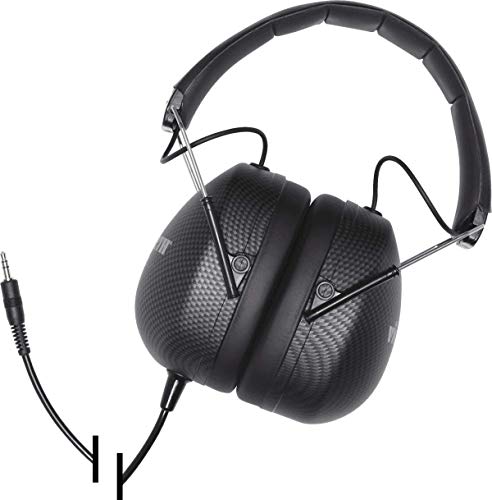
Make sure to check if headphones are included with the electronic drum set when you are buying it. If not, then I would recommend that you read my short guide on the best headphones to buy for e-drumming.
These are some of the most important accessories for e-drums.
I have used a pair of these for years, and they have served me very well! Also, they have great isolation of up to 22dB, so they are also great for protecting your hearing on acoustic sets too.
Alternatively, be sure to check out my article on the best in-ear monitors for drummers.
Drumsticks for Electronic Drumming
Any standard drumsticks work for electronic drum sets. If you are not sure what type of drumstick to buy, then I would recommend starting with a 5A size with a nylon tip.
Wooden tips can start to splinter after a lot of use. This can cause damage to your drum heads. If wooden drumsticks are all you have at the moment, then you should not worry too much. It is the long-term effect of damaged wooden sticks that can cause damage.

The Vic Firth 5A American Classic is a hugely popular model, and I still use it for most of my playing today. For me, they are just the right spot in weight and length to allow for speed and power in my drumming.
They are also very well-matched and balanced. This is something that can not be said for many cheap drumsticks! Well-balanced sticks mean that strokes from both hands will sound the same if used consistently and with good technique.
I highly recommend the Vic Firth 5AN American Classic (Nylon) to start with. There are a very large variety of other sizes to choose from. You could go with 7A for a lighter stick or 5B for a slightly heavier one. For more information about drumsticks and how to choose, check out this article on Modern Drummer.
Drum Stool/Throne

A friend of mine had to quit drumming because of problems with his lower back. This was a major blow to him, and years later, and countless dollars spent, he is still trying to rehabilitate to no avail.
The cause was related to poor sitting and ergonomics when drumming. The key to improving your posture while drumming is to get a good drum throne. I cannot stress this enough!
A really good option is the ROC-N-SOC Lunar Throne.
An unfortunate part of drumming is that good drum thrones are quite expensive. However, don’t be fooled into choosing a garbage product. Please don’t just use a regular stool or seat for drumming. They are simply not designed for drummers, and they will cause pain and damage and slow you down a lot. Check out this article on Modern Drummer to learn more about drum thrones.
Kick Pedal

Some electronic drum kits require a separate purchase of a kick pedal, and others will include them in the price. If your electronic drum set does not include one, then the Tama Iron Cobra Pedal would get you off to a great start.
If you’re interested in playing with a double kick pedal, make sure to read my separate article on this subject.
How to Record Electronic Drums
Many electronic drum sets include the option for some sort of basic recording and playback.
In addition to this, if you want to record electronic drums on your computer, you can do this in two ways. Every time you hit a drum pad, it triggers the drum module to produce a sound. If your set has audio-over-USB functionality then you can just connect it directly to your computer.
Alternatively, you can hook in external audio jacks into the drum brain, which can be connected to your computer via an audio interface. The audio can then be recorded into recording software on your computer.
You can either record the audio directly from your drum module, or you can send MIDI notes to your DAW (e.g. Ableton Live, Garageband, etc), which can trigger drum VSTs or drum samples. This is particularly useful if you want to use your e-drums to produce music. MIDI also contains data for velocity, so you will also get different levels of sensitivity in the notes from your playing.
Latency could be a problem depending on your setup.
We’ve got a really useful step-by-step guide on the different options (Read here: how to record electronic drums).
How to get the best sound from your electronic drums
MIDI triggering is the best approach to get the best sound quality when it comes to electronic drums.
Drum VSTs offer another route to detailed sounds and editing, although current modules such as the Strata Prime and Roland V71 also have extensive onboard sampled libraries.
Therefore you could get a good mid-range kit with high-quality triggering, such as a Roland TD316 or TD516, and connect this via MIDI to a drum VST. This would result in some of the best-sounding electronic drum tracks that you can get.
Can I add custom samples to my kit?
This depends on the drum module (also known as the “drum brain”) that comes with your electronic drum set. Some models allow for the import of WAV file samples.
MIDI capability is also a standard feature of electronic drum sets. If your model does not allow the loading of custom samples, then you could potentially trigger sounds from your computer.
Learning to Play Drums on an Electronic Drum Set
Electronic drum sets are a great option to learn to play drums. Electronic drum sets are a low-volume solution, and they often have features such as an onboard metronome, recording capability, and built-in coaching.
If you are a beginner, practicing your beats and fills can be very beneficial on these. To be a great drummer, you need practice. Drummers will generally find it much easier (and diplomatic!) to practice for long periods of time with their electronic drumming because of the lack of noise.

Practice sessions can be done in the early hours or after work or school in the evenings.
The electronic vs acoustic debate is very much a matter of personal preference. However, there is nothing stopping you from switching between the two later on down the line. You can also combine both into one particular set.
Electronic kits can also allow you to record your practice. This can be of tremendous benefit to your playing. It can really pinpoint inconsistencies in your playing and help you to identify problem areas.
Some electronic drum sets come with practice modes. Practice modes can do wonders to help a drummer stay on time and practice beats and patterns. These are both foundations for becoming a good drummer.
I know of some great drum teachers who now teach on electronic kits and send the students a recording of the class afterward. Read my guide on how to play drums for more information.
How can I learn to play the drums?
There are a wealth of video tutorials and lessons online. Check out our review article on Drumeo, one of the best online drumming resources.
Of course, you should definitely consider eventually getting a local drum tutor. They can help you to hone your skills and identify weak spots. However, they can be quite expensive. Depending on your budget, they can be used in combination with other lessons.
Some people decide to go it alone when learning an instrument. However, it is quite easy to stop progressing after you reach an intermediate stage if you go this route.
Using an Electronic Drum Set for Live Shows
Electronic drum sets are a much more convenient option when playing live shows. The module can hook up directly to a PA system without the need to set up mics or do extensive sound checks.
However, acoustic drums are still overwhelmingly the main preference amongst drummers for live shows. The look, sound, and overall feel of an acoustic set are superior when it comes to live performances for most genres.
That said, the music world is quickly changing. Modern drummers are often adapting hybrid setups, which combine both acoustic and electronic elements.
High-end electronic drum sets are also becoming much more of an option because they really have the presence of an acoustic drum set on stage.
The main disadvantage that electronic drum sets usually have in comparison to acoustic kits is their cymbals, it’s very difficult to replicate the overall depth of sound that an acoustic cymbal generates.
However, improvements in triggering technology are starting to bridge the gap, in particular with direct source pickups for metal cymbals.
Electronic drum sets are no longer just toys, entry-level kits, or limited to a small segment of music genres. The best electronic drum sets do an amazing job of replicating the feel and response to playing behind an acoustic kit.
Even the slightest drum hit can be detected with extremely sensitive mesh heads. Also, most electronic cymbals have sensors that can detect when the drummer is “choking” the cymbal to stop it from ringing.
You can also use drum triggers that you can attach to your acoustic drum set. So when you hit your drum, it will actually produce an electronically triggered sound. Some drummers are now opting for this option if they want an electronic sound while retaining the presence of a big acoustic drum kit.
Setting up and packing down an acoustic drum kit can be a nightmare when you have to do it a lot. Sound checks take a long time, and it can be a lottery with the sound engineer on the night as to how the drums are going to sound in the final mix.
Electronic drums do not have this problem. You turn up to a show, the sound engineer will connect a lead or two to your drum module, and away you go!
For concerts with limited space, many drummers usually opt for a Cajon (also known as a box drum). You could alternatively opt for an electronic drum pad.
Electronic drumming is innovating at a pretty fast rate (read this wiki here to find out more about the history of electronic drum sets).
There is one area in which electronic drum sets are far superior, which is my next point…
Many Different Sound Options and Samples
Electronic drum sets allow you to experiment with a large variety of different drum and percussion sounds. Most sets allow you to customize your set to put any sound on any pad.
If you or a friend is savvy with music production, some electronic sets will also allow you to sample your own sounds.
If you own an acoustic drum kit, you could record this and sample the sounds onto your electronic pads. Instead of regular tom-tom drum sounds, you can replace them with 80s power ballad-style drum sounds (here’s a link to those if you’re getting nostalgic!).
The sky’s the limit. Having such a range of sound opportunities means that you’re much less likely to get bored, and your one kit will suit a variety of musical situations.
Protect Your Hearing
Playing on an electronic set either part or all of the time means that you’re not always exposed to the loud volume of acoustic drums.
The damage that your snare drum, cymbals, and bass drum can do to your hearing is quite substantial.
If you play acoustic drums, you must use hearing protection. It doesn’t matter how young you are, your hearing is incredibly important. Once it’s gone, it’s gone forever.
Also, it is important to note that hearing damage doesn’t just come as hearing a lower volume; it’s often associated with tinnitus. Tinnitus is a pretty common condition where missing hearing receptors in your ears make your brain think you are hearing a constant noise.
If you always wear earplugs when exposed to loud music, it will do wonders to protect your hearing.
In fact, when going to concerts, I always wear a cheap pair of musician earplugs. The ones I wear are Alpine MusicSafe Pro earplugs, and they are really good at maintaining a clear sound while filtering out damaging sound frequencies.
I would highly recommend checking out the following website on Tinnitus if you need to learn more about how to protect your hearing as a musician.
How does this affect your electronic drumming? Just make sure to have the volume at a reasonable level on your headphones or amplifier.
Are electronic drum components compatible with each other?
E-drum technology is relatively standardized. Many pads and pedals will work with drum modules from another manufacturer. This mixing and matching can be very useful in order to get the best and most personalized experience.
However, as a word of caution, you should research thoroughly if you are planning to do so. Not all devices are fully compatible with each other. For example, hi-hat pedals can be an issue as these can be triggered differently across different manufacturers.
Summary
I hope this guide has given you all the information you need to know in order to pick the best electronic drum set for your needs.
Recommended Budget Electronic Drum Set:
Alesis Nitro Max
I have chosen this model as it’s a great, affordable option for all levels of drummers. At this price, it really packs a lot of punch and has a lot of impressive features. Check out my more detailed review of the Alesis Nitro Max for more information.
Its mesh heads for snare and toms put this in a different league when it comes to entry-level electronic drums.
Recommended Pro Electronic Drum Set:
Roland TD516
This is our top choice for those on the lookout for the best professional electronic drum set. The digital snare, ride and hi-hat give this set a very expressive playing response. The module is fantastic and the build quality is top-class, which I have come to expect from Roland.
Keep in mind that Roland offers several models within the V-Drums 3, 5 and 7 Series, so make sure to choose the one that suits your budget and needs.
Electronic drum sets are a great option whether you are a seasoned drumming pro thinking of going digital or a complete beginner looking to buy your first set.
Electronic drums open up so many opportunities for practice and playing compared to acoustic drum sets. They open up the drummer to a wide variety of drum and percussive sounds.
If you are interested in learning about combining your acoustic drums with electronic drums, then check out the following article which goes through your options.
We’ve also written a detailed article on the best drum pads and best kids drum sets.
That’s my round-up of the best electronic drum sets, as well as a buyer’s guide to make sure you know exactly what you need to buy. Do you have any questions that weren’t covered in this article? If so, write a comment below!




Great job. This should be the go-to site for every new electronic drummer out there
Thank you! You have made my hours of research and confusion simple. Very pleased with your writing and review.
You’re very welcome Shea! I’m glad you found it helpful!
Hope you can help me. Getting a set for my son and thinking about the Alesis DM10 – looks like good value for a big edrum set but don’t know how loud it is and our house is pretty small. What do you think?
Hi Sandra, if the set needs to be very quiet then I would always recommend going for mesh heads over mylar heads, even though they are a bit more expensive.
However, generally mylar heads can be easily replaced with mesh heads, so you could potentially swap them out later. Though, it’d be less hassle and expense to just go with the mesh heads straight away if you can.
I hope that helps!
What about if you want to reverse the drums for someone left handed who prefers that?
Hi John, yes all of the sets above can be used in a left-handed setup. You just need to swap around the positions of the module/drums, and some parts of the drum rack (arms/clamps) in certain cases. The instructions are not always great for how to do this, but it’s easy enough to figure out
Remember, unlike acoustic drums an audience cannot hear e-drums. Not every gig has a ready sound system you just get to jack into so I brought my own (band members needed to help for sure). Besides the drum kit you will also have to buy an amplifier, speaker (two if stereo) one bass cab (if heavy bass kick sounds wanted), a mixer, effects, cables etc. (extra 200lbs plus your drum kit). You’ll soon be asking yourself “why didn’t I pickup the harmonica or sing?!” But I love firing up my e-drum & 1,100 watt stereo P.A. sound system (closes neighbors luckily 1/2 mile away hee). ROCK-ON!
I’ve got a bit of a dilemma,
So I go to Berklee and we’re fully online at this point, I’m living off campus and am looking into purchasing my first electric kit to practice on. (Budget is hopefully no more than 2500) Main importance is that it feels natural (and ability to load my own sounds would be ideal since I do a lot of production) but sounding good is ofc important. My instinct is to go with something from the Yamaha DTX line since from what I’ve felt, the heads just feel a lot more natural compared with Roland’s and the Alesis kits all feel bouncy and fake. However, I recently got a SPD-SX and if i’m gonna blow a couple grand on a kit, it would probably be good to have that compatibility…. I guess my question for you is: Do I go with feel knowing that yamaha and roland won’t mix well if I attempt a hybrid live setup later on? or do I stick to roland and compromise on feel?
Hi Ezra, it’s very much a matter of preference. If you prefer the feel of the DTX silicone pads and the internal samples then go for Yamaha. For hybrid setups, I can’t really think of any compatibility problems if you mix between a Yamaha e-drum set and a Roland SPD-SX. The audio outputs would probably be going into a mixer and mixed from there. Also if you want, there shouldn’t be any issues hooking in Yamaha pads as inputs into the SPD-SX – they all use 1/4″ connectors and most drum pads and pedals are standard (apart from hi-hats). Also, if you’re big into production, then you don’t necessarily need custom sampling on your drum module as you could just trigger your own samples via MIDI. Therefore, you could potentially opt for a cheaper drum module. Hope that all helps!
Great article!! So….past drummer looking to get back into it and a first electronic kit. In simple terms, what is the process and what to look for when you want to play to music, ie. from Spotify or your own MP3’s?
Hey – drum modules often have an 1/8″ inch AUX input that will allow you to play music through the drum module, so you could play music from your phone from Spotify, mp3s, etc. There are also drumless backing tracks that you can find online (we’ve got an article about that too) that might be useful.
Thanks for the informative article! I haven’t played for 10 years, and I’m considering an electronic set to get back into it. Which brands/models have the best tutorials in your opinion? I’m hoping for something that makes learning fun and structured with almost a guitar hero type spirit.
You’re welcome Brian, I’d recommend you check out ‘Melodics’ if you’re looking for interactive learning like that, which works quite nicely with Roland, Alesis, and Yamaha drum kits (and likely others as well).