Are Electronic Drum Modules and Pads Interchangeable?
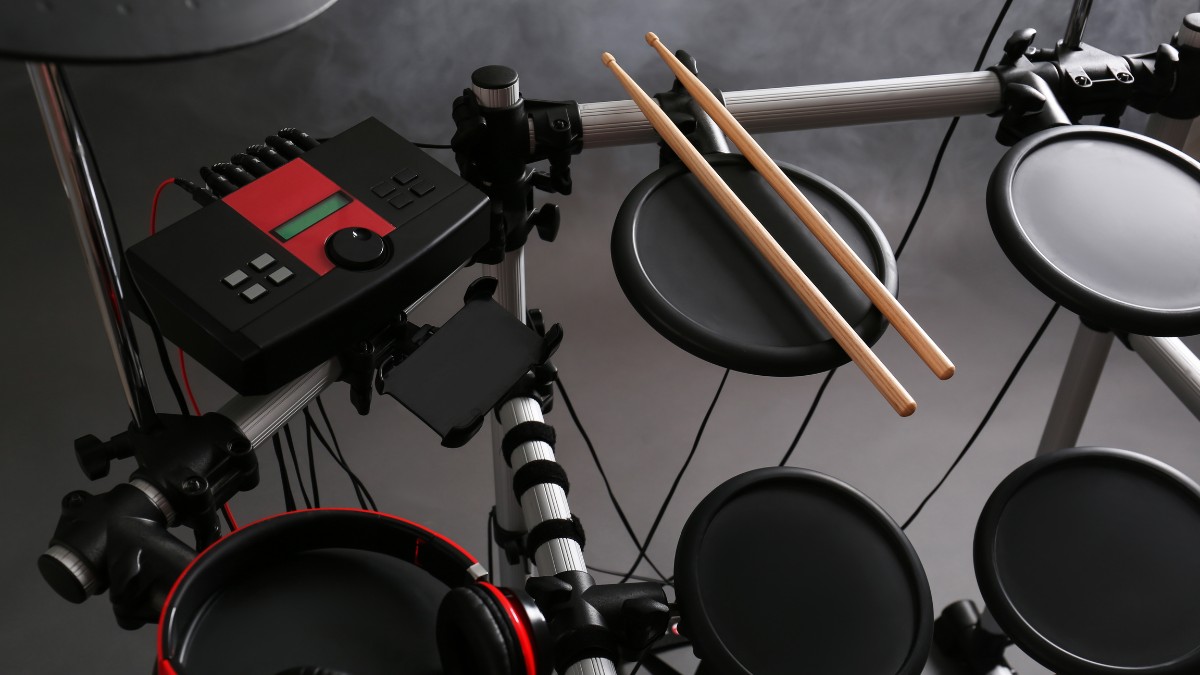
Many drum modules are interchangeable with different pads from different manufacturers, but not all pads are compatible with all modules. The safest bet is to use a module and pads from one manufacturer as they will likely work to some extent, but not in all cases, and even if they do work, you might not get the full features of the pad (e.g. double and triple zones).
Where the pads will be more likely compatible:
- Where the pad/module uses the same connection (i.e. a 1/4-inch jack) and the module supports that pad’s trigger type. A matching plug alone does not guarantee compatibility.
- Where the module input supports the pad’s number of zones (e.g. double or triple zone) and the required cable arrangement.
- Where modules and pads are from the same brand.
Where the pads will be less likely to be compatible:
- Where the pad/module uses a different connection type.
- Hi-hats can be incompatible across brands as they sometimes use different protocols.
- Advanced digital pads such as the Roland PD-140DS only work with specific high-end Roland modules.
Electronic drum set players probably wander around this question from time to time. Are drum modules and pads interchangeable? Well, the short answer is – sometimes. Not all modules are compatible with different pads and the safest way to go about this is to do your research before committing to a different module or pads.
Contents
What Drum Modules and Pads Are Interchangeable?
Some drum modules and pads get along great, and some don’t. Usually, drum modules and pads from the same brand work best together. But not always. So, it’s really important to do your homework first. Try out different combinations if you can, or ask someone who knows.
Many drum pads and cymbal pads use a 1/4-inch connection, but compatibility also depends on the trigger type and the module input. But sometimes, a pad might have more features than a module can handle. For example, a pad might have three zones, but a basic module might only support one or two zones. Check the module’s supported-pad list and the input you plan to use. Some three-zone cymbals need two cables and two assigned inputs to access the bell as well as the bow and edge.
Also, more advanced digital pads, like the Roland PD-140DS, need a special kind of digital trigger connection. Supported modules include the V71, V51, V31, TD-27, TD-50X, and TD-50. This is a dedicated digital-pad input, not an ordinary computer USB connection. The PD-140DS won’t work through the analog trigger inputs on a TD-9, for example. Check the exact pad/module pairing and any required firmware update before buying.
Hi-Hat Compatibility
One tricky bit to watch out for is the hi-hats. Hi-hats are the biggest areas for lack of capability to match as they may use different protocols and just don’t work as expected across different brands or modules. So always double-check before you try to mix and match. Check the cymbal pad and its controller separately: hearing a hi-hat hit does not prove that open/closed positions or the pedal chick will work. Follow the module’s calibration procedure for the supported controller.
Compatibility and Interchangeability
General Rules for Interchangeability
If you stick to the same brand and use the same type of connections, your drum module and pad will often work together. But if you want to try a different brand or a more advanced e-drum set, you’ll have to do some research first. An entry-level module may trigger a basic hit from a more advanced analog pad without supporting all its zones or other features. Digital pads need a specifically supported digital input. Select the recommended trigger type first, then test soft and hard hits, rim sounds, and cymbal choking where supported.
Cables and Basic Drum Modules
With more basic drum modules, it’s common to have a cable snake or harness, where several labeled trigger leads meet at a single multi-pin connector on the module. This configuration, while making for a neat setup, can also bring about certain limitations. The harness has a fixed set of labeled inputs and cable lengths, though suitable extensions may be possible where the manufacturer supports them.
In situations where flexibility is required, these constraints might present challenges. Furthermore, if a cable happens to malfunction, it could necessitate the replacement of the entire cable set. This highlights the importance of proper cable care and maintenance to ensure the longevity of your drum setup.
Conclusion
Mixing and matching drum modules and pads can be a bit like a puzzle. Sometimes they fit together, and sometimes they don’t. Always remember to check if they’re compatible and don’t be afraid to ask for advice. Most pads and modules from the same manufacturers are compatible to some extent but you should always double-check before committing.