What is a Drum Major?
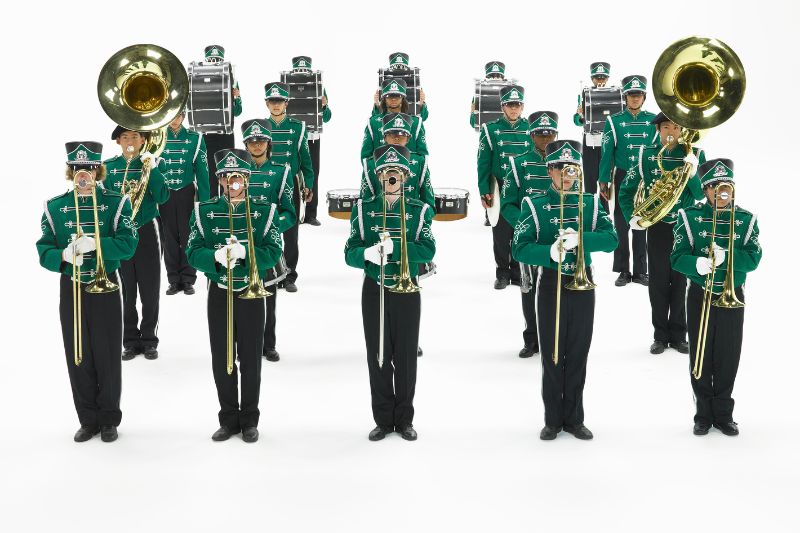
A drum major is a person who is in charge of marching, military, or regimental bands. Military drum majors use a ceremonial mace, sometimes known as a baton, for giving commands while marching. He is also a leader of the band both for rehearsals and in live performances.
- One of the most important roles of a drum major is to carry out the director’s and any instructional personnel’s directions for what the marching band should do.
- A drum major, in addition to leading the band in rehearsals and live performances, does warm-up drills with the band, assists in teaching marching to other band members, and represents the band at awards ceremonies.
- A drum major should have a perfect understanding of music, have skills as a field conductor, be proficient with a mace or baton, have great vocal command (loud and clear), and basically have exceptional leadership skills.
- A drum major can use the 5 D’s of a marching band as a reminder of responsibilities, while following the program’s own handbook and the director’s instructions: Drums, Discipline, Drill, Deportment, and Dress.
- Drum major camps are one route to training, alongside instruction within the band and mentoring by experienced drum majors. Since their leadership obligations take practice, drum majors learn by watching, doing, and getting feedback as they develop the skills of being a competent drum major.
Contents
What Skills Should a Drum Major Have?
A drum major’s job is tough and requires a lot of skills in order to do it well. From having a perfect understanding of the music that the whole ensemble is playing to having the ability to inspire and lead the whole band.
A drum major also needs to have a good relationship with the director and the band so that he or she can act as a bridge between the two and help form a mutual understanding. They also need to have skills as a field conductor, skills in using a mace or baton, as well as having great vocal commands, and being loud and clear when issuing a command.
Apart from having amazing leadership skills, one of the most important tasks of a drum major is to control the tempo that the band plays at as well as set the marching pace.
The 5 D’s of a Marching Band
The “5 D’s” below are a useful way to group responsibilities, rather than a universal rulebook for every marching band. A drum major helps communicate expectations; the director and section leaders also share responsibility for training and standards.
1. Drums. This refers to the maintenance of the drums, tuning, practice, choosing complementary compositions, and drum scores.
2. Discipline. Being a drum major requires a lot of discipline, and so does being a band member. The drum major is responsible for the discipline of the whole band, which means that he/she ensures that the band is in the right place at the right time.
3. Drill. As I mentioned, a drum major needs to be skillful with the mace, or a baton, but all of the drum members need to know and understand the commands that the drum major is giving. Therefore, a drum major ensures that everyone understands the command and is ready to execute them to a very high standard.
4. Deportment. Deportment refers to how every band member should conduct themselves, and a drum major needs to ensure that the whole band is doing that with decorum.
5. Dress. It’s really important in a marching band that everyone is properly attired.
A Drum Major’s Training
Depending on the resources of their home program and the drum major’s prior experience, a drum major may get training in a variety of methods. Conducting and leadership can be taught through instruction, practice, and feedback. Training may come from the director, other staff, former drum majors, or a camp. Ask your director which conducting patterns, marching commands, and rehearsal duties your own band expects before choosing a training course.
To learn how to lead and instruct their band, drum majors can attend camps or take part in their program’s own training. Music for All’s Drum Major Institute teaches leadership alongside conducting, mace work, and score study. Ohio State uses a drum major training squad and opportunities to train with former drum majors before selection. Those are examples of structured teaching, not evidence that every band follows the same route. Combine instruction with supervised rehearsal practice: give a clear preparatory beat, check the ensemble’s response, and ask for feedback on your tempo and cues.
Conclusion
Being a drum major takes a lot of discipline and leadership skills. A marching band can include anywhere from 20 all the way to 250 marchers, and being the one responsible for everyone is not an easy task. Therefore, a drum major is a really important part of a marching band and someone who ensures that the director’s vision comes to life.