The 3 Best Jazz Drum Sets (Bop Kits) (2026)

Jazz drum kits are different from the rest because they don’t require too much gear and instead rely more on the bass/snare drum and ride cymbal. The sound of jazz is often very lightweight and soft. This is a selection of drum kits best suitable for jazz.
Jazz drumming is a highly demanding art form where you have to keep time without compromising on musicality. In early jazz, the drummer’s job was to simply give the music a lively pulse. However, soloists such as Gene Krupa and Buddy Rich helped to make drums a prominent lead instrument in jazz.
So, it doesn’t matter whether you’re out there keeping a swing beat or ripping out jaw-dropping solos. What you need the most is a great-sounding kit that fits your style.
My first recommendation would be the Gretsch Catalina Club Jazz CC2-J484 (Piano Black). A classic kit trusted by many jazz drummers for its great sound and versatility.
My second recommendation would be Yamaha Stage Custom Bop (Natural Wood). If you already have a snare, cymbals and hardware, this is a very nice value shell pack.
Contents
- The 3 Best Jazz Drum Sets (Bop Kits) 2026
- 1. Gretsch Catalina Club Jazz CC2-J484 (Piano Black)
- 2. Yamaha Stage Custom Bop (Natural Wood)
- 3. TAMA Club-JAM LJK48S (Cream Marble Wrap)
- What type of drums are used in Jazz?
- What are the Most Common Materials Used for Jazz Drums?
- Which drumheads should you choose for Jazz?
- The most important cymbal for Jazz – The ride
- What to look for when Buying a Jazz Drum Kit?
- How Hard is Jazz Drumming?
- Verdict
The 3 Best Jazz Drum Sets (Bop Kits) 2026


Let’s look at them in more detail:
1. Gretsch Catalina Club Jazz CC2-J484 (Piano Black)
When you put the classic tone and look of a traditional jazz kit, and add modern hardware, you get the Gretsch Catalina Club drums. They give a nice warm but punchy sound, which is great for jazz and rock music.
Pros
- Softer mahogany shells
- Controlled kick drum sound
- Comes with good stock heads
Cons
- It’s a shell set (you need to buy hardware separately)
The Catalina Club CC2-J484-PB shells are built with 7-ply mahogany and have a Piano Black finish. They look and sound classy, especially in an intimate setting. This Jazz configuration has an 18 x 14-inch bass drum, 12 x 8-inch rack tom, 14 x 14-inch floor tom and 14 x 5-inch snare. The shallow bass drum gives you good control of the sound while keeping the kit nicely compact.
While these drums keep their retro look, the hardware on the shell pack is anything but. Handy features, chrome finish, and good stock drum heads really make the Catalina Club Jazz an easier kit to get started on.
2. Yamaha Stage Custom Bop (Natural Wood)
The Yamaha Stage Custom Bop is my value choice for a drummer who already has a snare and cymbals. It gives you a proper 18-inch bop configuration without asking you to pay for a large set of drums you may never use.
Pros
- All-birch shells
- 18-inch bass drum and compact tom sizes
- Y.E.S.S. tom suspension and adjustable ball mount
Cons
- Snare, cymbals and stand hardware are separate
- A three-piece shell pack is not a complete starter kit
The Natural Wood SBP8F3 pack has an 18 x 15-inch bass drum, a 12 x 8-inch rack tom and a 14 x 13-inch floor tom. A single tom holder is included. Those sizes keep the kit manageable for a small stage, while leaving room to choose your own snare sound.
Yamaha uses birch throughout the shells. The practical appeal here is a focused response and familiar hardware, rather than a claim that one wood is the only right choice for jazz. Good heads and careful tuning still make a huge difference. The ball mount makes it easy to place the rack tom where your hands naturally fall.
This is a sensible upgrade if you have built up a useful collection of cymbals and a snare you like. Keep those parts and put your money toward the shells. If you are starting with nothing, add the cost of a pedal, throne and stands before comparing it with a complete outfit.
For a small combo I would choose this over a larger kit just to get extra toms. You have the basic voices for swing, brushes and fills, and fewer cases to carry. It also gives you a straightforward base for experimenting with tuning as you develop your sound.
3. TAMA Club-JAM LJK48S (Cream Marble Wrap)
Even though TAMA is well-known for its rock-oriented kits. The Club-JAM, however, adds big time to their jazz drums portfolio.
Pros
- Compact size
- Perfect for small venues
- Conveniently portable
- Poplar shells
Cons
- Doesn’t measure up in sound to the higher-end kits on this list
- Might be a bit too compact for some drummers!
Club-JAM’s biggest asset is its compact design. The small dimensions and a cymbal holder mounted on the bass drum make them perfect for small, club-sized gigs. The kit is also very portable.
As far as sound goes, Club-JAM’s small size gives a snappy, responsive sound. The shells are made of poplar wood, which brings out a beautiful, warm tone.
What type of drums are used in Jazz?
Open, resonant drums are a familiar part of acoustic jazz. Many bop players tune their toms higher than rock drummers, although the right tuning depends on the music. It has been so since the early days. This sound can be found in lighter woods like mahogany, poplar, birch, and maple, especially regarding the resonance.
Back then, mahogany wood used to be the staple in bop kits. However, maple drums have taken over as the mainstay, given their efficient manufacturing.
What are the Most Common Materials Used for Jazz Drums?
When it comes to the topic of materials for a jazz drum kit, a few come to mind. You have poplar, mahogany, maple, oak, and birch, so let’s dive more in-depth into each one.
Maple is a common choice for jazz drums and can cover a wide range of sounds. It is not automatically better than the other woods here. The shell construction, heads and tuning matter as well, so choose the response you like rather than treating the wood name as a quality ranking.
Poplar wood is a more budget option, more commonly used as an alternative to maple. A highly distributed material which is why it can be found on so many drum kits.
Mahogany is one of the more durable options but comes with a bit of price on it. It helps in producing amazing sounds due to its unique structure and timbre.
Oak is another durable option and is a very well-rounded material as well. Highly used due to its aesthetics and good-quality sounds.
Birch is frequently used because of the thick and durable nature it possesses. Withstanding more power while providing more precision in playing.
Which drumheads should you choose for Jazz?
Evans G1 coated and Remo Ambassador coated are well-known and make for good drum heads for jazz. The stock heads that come with drums can often be a bit sub-par. Try the supplied heads and tune them carefully first. Replace them if you cannot get the response you want, or if you need coated heads for brushwork.
The most important cymbal for Jazz – The ride
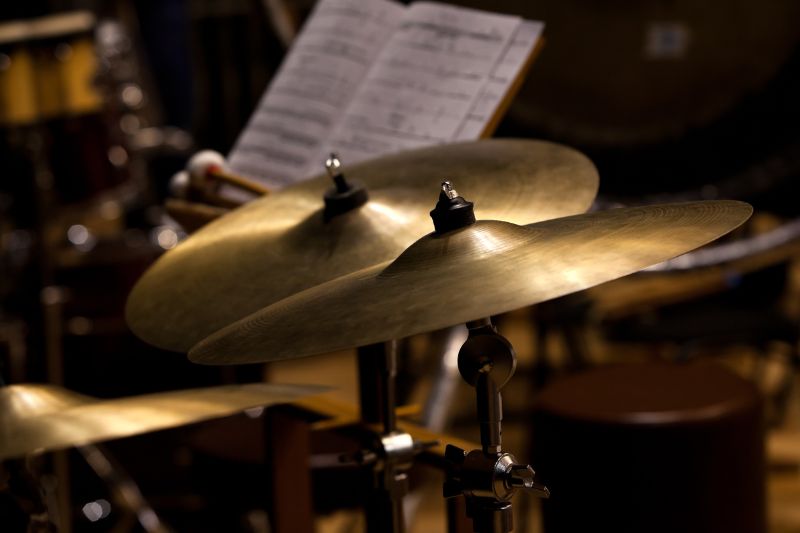
The majority of jazz is played with a swing feel and the ride cymbal is the hero. The groove is built on it and the band depends on it. The ride has a soothing sustain which compliments the sound of the rest of the kit. So, it is important to get a good ride cymbal in your collection and not just focus on crash cymbals.
Jazz often requires a lighter ride than rock or metal since the music is more mellow. If you play in a more big band environment, something like Zildjian K or K Constantinople Renaissance might be a good option. If your music is more contemporary, dry-ride cymbals are also a good choice. Check out our article on the best cymbals for jazz for more information.
A complete beginner outfit and a shell pack solve different problems. A complete outfit can supply stands, a pedal and basic cymbals in one purchase. That can be useful for a first kit or a backup setup, but the included cymbals and heads deserve a close look. They may be the first parts you want to improve as your ear develops.
The three picks here are shell packs. The Gretsch and TAMA include a snare; the Yamaha does not. None should be treated as a ready-to-play package with a full set of stands and cymbals. This is why the Yamaha is a value choice for someone who already owns those parts, rather than a direct replacement for a complete beginner outfit.
At the other end of the range, a custom drum order can let you choose sizes, finishes and hardware in more detail. That is a reasonable route for a player who knows exactly what they want. It is less useful as an off-the-shelf recommendation when the available set has a different configuration from the one described. You do not need a custom kit to get started with jazz.
For a small acoustic group, start by deciding how much space you have on stage and which drums you actually play. A compact bass drum and one rack tom leave more room for the ride and keep the kit easier to move. A larger bass drum can still work well for big-band playing or a drummer who covers several styles. Bop sizes are a useful starting point, not a rule that every jazz drummer must follow.
What to look for when Buying a Jazz Drum Kit?
There are a few things to look for in a jazz drum kit, starting with the most obvious one and that is – is it the full package? You’ve probably already seen ‘shell pack’ which means that the drum kit comes with its individual parts like a snare, a floor tom, a rack tom, and a bass drum with their own set of hardware, as opposed to a full drum kit.
If you want to avoid this, keep a close eye on the descriptions, as many can come as a shell pack and not a complete drum kit. My advice, check the hardware list, if the kit has a complete set of hardware, then you are getting a full kit. Also, most kits don’t include a drum throne, so make sure to set aside a bit of your budget for a good one.
Another obvious one is to consider the price. If you are on a budget, then proves no point to go all out on a high-quality drum kit and break the bank. You should slowly progress and start with a 4-piece drum set with good quality instead of opting to go all out on the best jazz drum kit right away.
Lastly, durability and quality are something to consider too. This can be anything from even the bass pedal to any other set of gear you are purchasing. Durability is a key factor and is good for longevity, whereas quality is good for sound.
One last piece of advice, get good drum heads if you can. Remo heads are probably the most frequently used by most so try that. Remo drum heads offer a good well-rounded sound suitable for almost anyone.
How Hard is Jazz Drumming?
Jazz drumming is commonly considered a difficult genre to play on drums. Some teachers introduce a simple swing beat early, while others begin with straight rhythms. Even basic jazz benefits from an understanding of the feel and the triplet subdivision. As you progress further, jazz drumming gets tougher with odd times, polyrhythms, polymeters, etc. But don’t let this discourage you. Take it head-on as a challenge. Realize that the more you practice, the better you will get. Here are some easier songs you can practice to enter this daunting realm:
As you progress further, jazz drumming gets tougher with odd times, polyrhythms, polymeters, etc. But don’t let this discourage you. Take it head-on as a challenge. Realize that the more you practice, the better you will get.
Here are some easier songs you can practice to enter this daunting realm:
Cantaloupe Island – Herbie Hancock
Bye Bye Blackbird – Miles Davis
Study The Greats
You can see a broader world when you sit on the shoulders of giants. A good way of expanding your horizon and getting inspired when you’re down is by listening to some of jazz’s all-time great drummers.
Legends like Buddy Rich, Art Blakely, Elvin Jones, Gene Krupa, and Louie Bellson have been immortalized because of their contributions to this craft. To this day, they continue to fuel many drummers around the world. Start with them and don’t stop.
Verdict
Finding the perfect jazz drum kit is a tedious task given the sheer amount of options out there. At the end of the day, it all comes down to your personal preferences. You know best about what kind of music you play, what kind of environment you play in, and your budget. When you do find a kit though, make sure you make the most of it.
I have made it easier by narrowing it down to three with my top recommendation being the Gretsch Catalina Club Jazz CC2-J484 (Piano Black), a classic kit fit for the genre.
My second recommendation is Yamaha Stage Custom Bop (Natural Wood), a very nice value shell pack for players who already own the other parts.