How Do Electronic Drums Work?

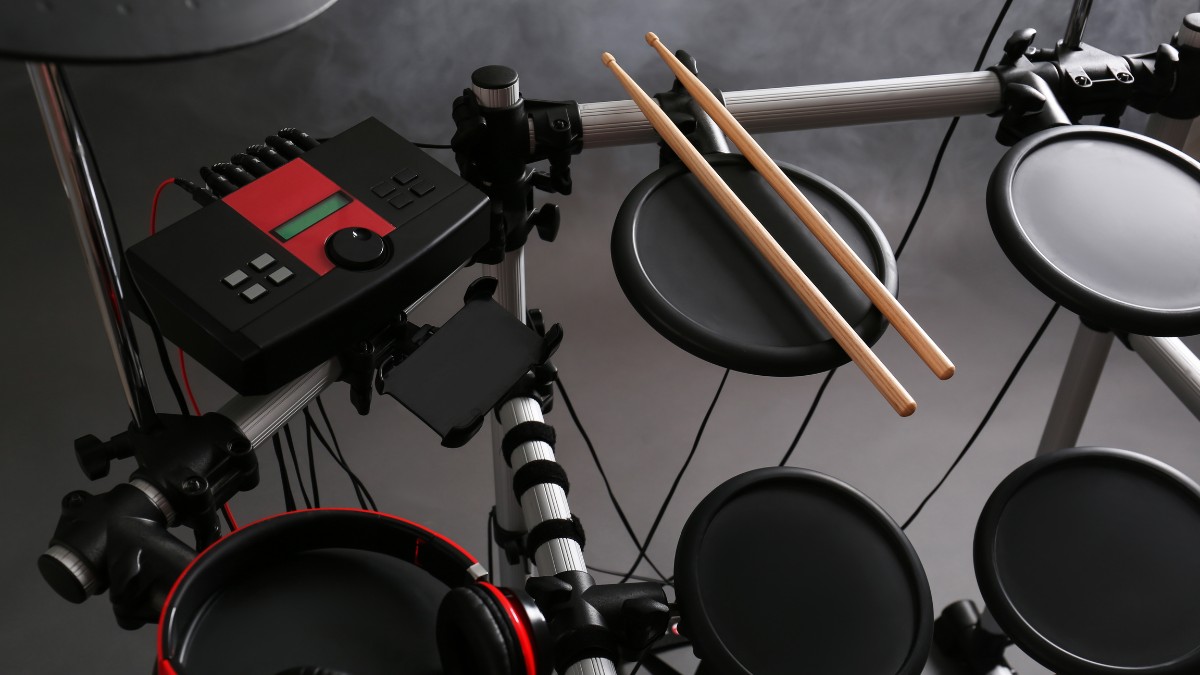
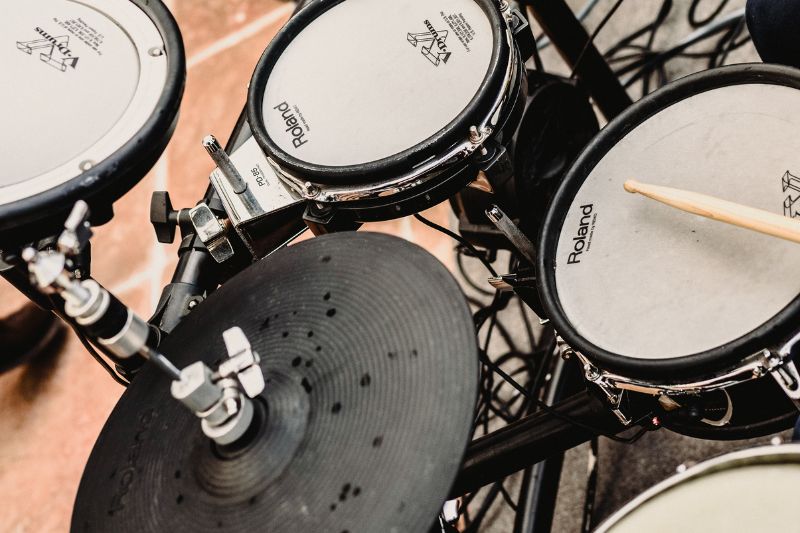
An electronic drum kit has two main components: a drum module and drum pads. Every drum or cymbal pad is connected to the drum module, which produces the sounds with the help of the sensors built into the pads. A drum module can control volume, sensitivity, and many different sounds.
Electronic drums work a lot differently than acoustic drums. If the drum module isn’t powered on, then the e-drum kit won’t produce any sounds other than the drum stick hitting the pad. The sound comes from the drum module (also referred to as the “brain”) that turns all the hits on the pads to the sounds they are assigned.
The drum module needs information from the sensors built into the drum pads to properly calculate and produce the correct sounds. Many pads use piezoelectric sensors, sometimes combined with switches, while some digital pads use several sensors and onboard processing. Sensor design is one factor in the difference between budget-friendly e-drum kits and high-end kits; the module, playing surfaces, and hardware matter too.
Contents
What Are Drum Modules?

The drum set’s central processing unit, the drum module, generates sounds in response to the drummer’s triggers and the selected sounds. There is a reason why they are called the “brain” of an e-drum set. They are one of the most important components in an e-drum kit as they do much more than just translate the hits into sound.
The connectivity ports are important things to look for in a drum module. Check whether it sends MIDI over USB, uses five-pin MIDI sockets, or offers both. MIDI sends performance instructions such as which pad you hit and how hard, rather than the sound itself. It can connect your module to a computer and your DAW to trigger VST plug-ins. Audio recording is a separate function to check.
Other basic functions of a drum module include: choosing your sounds and controlling your volume, sensitivity, and layers. Drum modules also have different practice modes built-in, metronome, and some even have Bluetooth.
Some drum modules offer useful features such as importing your own samples and recording audio over USB. These functions vary by model, so check the manual rather than assuming a price tier includes them. A built-in USB audio interface sends sound to a computer; separate audio outputs, where provided, let a live sound engineer balance parts of the kit independently.
How Important Are The Sensors?
Sensors are an important part of an e-drum kit, but the pad and module have to work together. Before blaming poor response on sensor technology, check that the pad type and trigger settings match the connected pad. Sensitivity affects how hits translate into volume, while threshold affects which weak signals are ignored. Unfortunately, finding information about the sensors of a specific e-drum kit is often harder than finding the module’s feature list.
The sensors’ job is to detect a hit and provide information about its strength and, on compatible pads and modules, its position. Roland’s PD-140DS digital snare, for example, has a multi-element sensor system and needs a compatible digital trigger input. Basic pads do not all offer positional sensing. After detection, the pad and module must respond promptly together; sensor count or connection speed alone does not describe the whole playing response.
Can I Add Extra Drum And Cymbal Pads?

That depends on the e-drum kit you decide to buy, specifically, the drum module that comes with it. Some drum modules don’t have additional pad inputs, while others offer several. Expansion is something you want to think of in the early stages when buying an e-drum kit. Check the supported pad types and zones as well as the number of sockets: a spare input does not guarantee every pad will work with it.
What Are The Advantages Of Using Electronic Drums?
Portability. One of the most significant advantages of electronic drums is their convenient design. They can be set up and played almost anywhere because they don’t require as much space as an acoustic drum set would.
Versatility. You can choose from quite a lot of sounds that come with the drum module, and if that is not enough, you can always turn to VSTs. Most drum modules offer good effects and sound editing capabilities, so you won’t get bored quickly with playing the same sounds.
Quiet Practice. E-drums shine for quieter practice sessions. If you’re living in an apartment and want to avoid noise complaints, electronic drums can help, but they are not silent. They produce a much lower volume when struck than an acoustic kit, and the outgoing sound can go into an amp which you can turn down or directly into your headphones. Pad strikes and pedal vibrations can still reach other rooms or the floor below, even with headphones on.
Recording. Acoustic drum kits take more work to record. Microphones and the room affect the result, although excellent audio does not require a soundproof studio or a large space. E-drums are easier to record without capturing room sound: use USB audio if your module supports it, or connect its audio outputs to an audio interface. A MIDI-only connection records the performance data rather than the module’s actual sounds.
Price. Most beginner and intermediate-level e-drums offer a lot of features for the money. With acoustic drums, as mentioned, accessories and recording equipment can bring the total up quite a bit. That being said, there are expensive e-drums on the market too. Compare complete setups: an electronic kit may still need headphones or amplification, a throne, and sometimes pedals. The better value depends on what is included and whether you need quiet practice, acoustic performance, or recording features.
Are Electronic Drums Good For Beginners?
Absolutely! Many e-drum kits have learning and practicing features that can help you improve your drumming. Beyond that, their lower volume makes regular practice easier to arrange. Keep the headphone level comfortable and check whether the pad and pedal noise can be heard elsewhere before assuming you won’t disturb anyone.
Another great advantage for beginners is that you can easily move them around. They are easy to transport from your bedroom to your practice place, to the studio, and so on. Many private music schools these days have e-drum kits in their offices, which are more convenient than traditional acoustic drum sets.
Conclusion
There is a lot that goes into designing and manufacturing electronic drums and in order to fully understand how they are built, you would have to be an engineer. Nevertheless, these complex pieces of electronics are the reason for the “low barrier to entry” or so to speak, to an amazing musical journey!