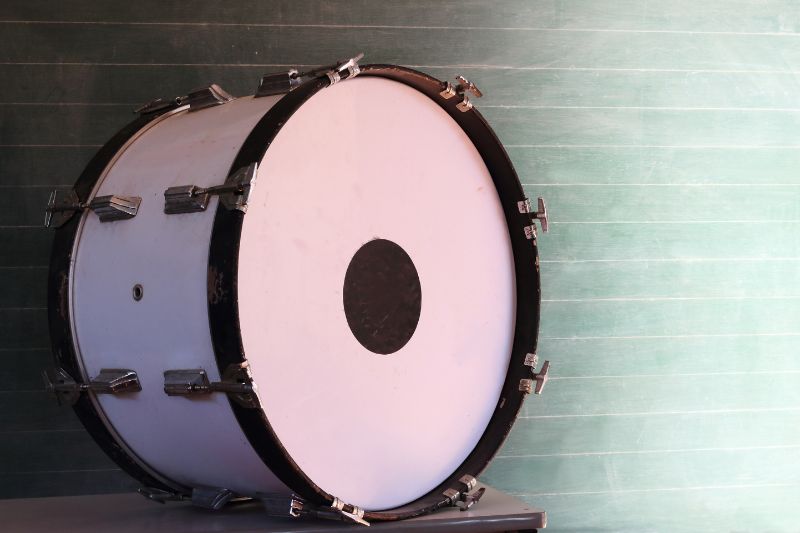
Is Stacking Acoustic Drums Bad for The Heads?

Drumheads generally cannot take constant pressure, as they are designed to stretch and revert back to their position. That being said, a lot of people stack their drums for storage and haven’t had any issues with the drum heads, other than some of them going out of tune, which is to be expected.
For storing, and especially for transport, the best way to pack your acoustic drum set is to use drum bags and cases. But if you do not own any bags or cases and you want to store your drums when you’re not playing them, stacking them will take up less space but it’s not the most recommended option.
Other than the heads going out of tune sooner, the hoops on the drums can leave a dent in the head they were on. If this is something that will bother you, I recommend that you don’t stack your drums, as those dents will irritate you every time you see them.
Contents
Pros and Cons of Stacking Acoustic Drums
You can see a lot of drum shops stack drums when they put them on display, and the reason is that this way, the drums can be seen without taking up a lot of space. So if storage space is an issue for you, then stacking your drums for storage is a big pro. Also, they look good, right?
One con that I can think of is that weight on the heads can affect tuning. That does not make long-term stacking harmless: a load left on the head can distort it, and a short stack can still slip. Check the tuning when you bring drums out of storage, but judge the storage arrangement by how it supports and protects each drum, rather than by a fixed number of days.
Also, the famous dent in the head might be a big con for some people. A drum sitting directly on a head can leave a lasting mark or dent. Avoid stacking your drums if you are easily bothered by things like this.
Pros and Cons of Using Drum Bags And Cases
Although it requires an up-front investment, drum bags and especially cases are the best way to store and transport your drums. Drum bags are lighter and easier to carry, while the hard cases are more durable and provide better protection for your drums. I recommend hard cases if you are traveling a lot with your drums or if you go on tour.
We all know how easily acoustic drums get dusty, especially if you are storing them and not playing them. One big pro for using bags and cases is that you avoid cleaning dust from all over your drum set when you don’t play them for a while.
And I have to talk about the only con of using drum bags and cases. And it’s an obvious one. Drum bags and cases are pricey, especially if you want some of the better ones. Fortunately, there are also some good budget-friendly options on the market.
Does Stacking Acoustic Drums Cause them to Detune?
Stacking can affect tuning if an upper drum puts weight on the head below. A drumhead is a tensioned playing surface, so I would avoid using it as a storage shelf. There is no reliable few-days-versus-few-weeks cutoff; head type, load, contact area, and the storage environment all matter. Before playing again, check for dents and wrinkles as well as whether the drum is out of tune.
How to Properly Stack Acoustic Drums?
If you’re set on stacking your acoustic drums, there is no universal safe four-drum limit. A larger drum such as the kick drum at the bottom may make the arrangement look stable, but size alone does not protect the head or prevent tipping. I recommend storing drums separately on a secure shelf, or using fitted cases designed to stack, within their maker’s limits. Keep the heaviest items low and make sure nothing can slide.
Note that toms or snare should not carry another drum directly on either head. Turning the resonant head upwards simply transfers the load to that head, which can be thinner than the batter head (the side you strike). Cardboard does not turn a head into a shelf. A separate rigid shelf or purpose-made storage support should carry the weight; protect the finish and keep snare wires clear of contact.
Bonus tip – follow the drum maker’s storage instructions before changing head tension. Yamaha recommends keeping stored concert-snare and tom heads taut enough to retain the tension rods. That is different from loosening every rod to finger-tight, and instructions can differ for other drum types.
What are some Additional Tips for Storage?
Properly storing your drum set will increase the longevity of the drum heads and preserve your kit, in general. You want to store your kit in cases if possible, in a nice, normal-temperature room, without exposing them to direct sunlight. Humid rooms can also be detrimental to your drums and the overall wood so deal with excess moisture rather than adding more with a humidifier. Naturally, clean your kit regularly and make sure to change the drum heads when wear or sound makes replacement necessary, rather than automatically twice a year. Inspect for dents, damage, or tuning that no longer holds, and dry the drums before putting them in cases.
Conclusion
If you are planning to store your drums for a short time, I still recommend keeping weight off the heads. If you don’t have bags or cases, a secure shelf with protected contact points is a better option than resting one drum on another drum’s head. If you have bags and cases or want to invest in some, it’s always recommended that you store your acoustic drums with beautiful finishes in them to avoid tuning issues, marks, dents, and dust.