The 5 Best U87 Alternatives (2026)

The Neumann U87 is one of the most sought-after microphones for its rich sound and versatility but it comes at a cost! However, there have been serious attempts at recreating this highly successful classic large-diaphragm condenser microphone by other brands in a more affordable product.
For those who can’t afford to pay thousands of dollars for a recording microphone, there are suitable alternatives that come close.
For the closest feature match in this list, start with the Warm Audio WA87 R2, which offers three pickup patterns, a pad and a high-pass filter in a current WA-87 R2 package.
My second recommended alternative is the Stellar X2, which is affordable and of decent quality.
Note: When buying a large-diaphragm condenser microphone, it’s important to make sure you have good acoustic treatment in your room, as these mics can pick up a lot of background noise. Make sure to put a good deal of your budget towards room treatment rather than spending it all on your microphone!
Contents
The 5 Best U87 Alternatives (2026)


Let’s compare these in more detail.
1. Warm Audio WA-87 R2
Not many manufacturers have launched a switchable large-diaphragm condenser microphone with “87” in the product code as Warm Audio has done! But there’s more to this clone than the name!
Pros
- Performs well for vocals
- A good microphone for stringed instruments
- Full-spectrum frequency response
- Good-quality overall professional sound
- Great price point
Cons
- Although it’s far more affordable than the original U87, it still can’t be classed as “cheap” in comparison!
To reduce transmission from the microphone stand, the WA87 is mounted in a handsome spider. This is also based on the “EA” design (elastic suspension) from Neumann. As with the original: omnidirectional, cardioid, and figure-eight polar patterns are available.
The current WA-87 R2 is the model linked here. Its cardioid, omni and figure-eight patterns, 80 Hz high-pass filter and -10 dB pad make it the most versatile 87-style option in this group. A shared 20 Hz to 20 kHz published range does not establish that two microphones sound alike.
| Type | FET Condenser |
| Polar pattern | Cardioid, Omnidirectional, Figure-8 |
| Frequency range | 20 Hz to 20 kHz |
| Maximum SPL | 125 dB |
The WA-87 R2 is recommended for aspiring engineers and professional voice actors. It’s also most recommended for those looking for a scaled-down Neumann U87, not necessarily in performance, but mostly in price!
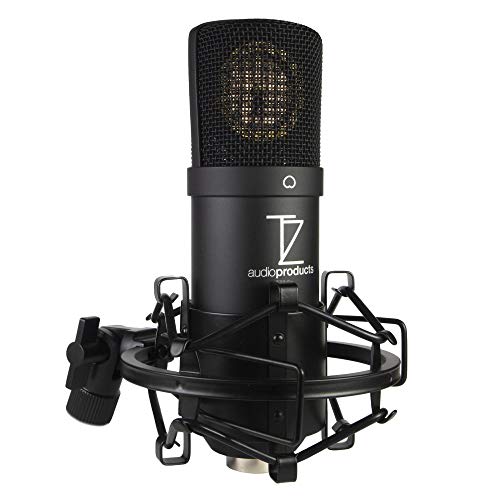
2. Stellar X2
The Stellar X2 is a simpler cardioid condenser rather than a multi-pattern U87 replica. It is a practical choice for a home studio that mainly records one voice or instrument at a time and does not need the WA-87 R2’s pattern switching.
Pros
- Lighter than the U87
- Low distortion and self-noise
- Balanced sound needing less editing
- Good for voice-overs
- Good build quality
- Hand-tuned capsule
Cons
- It doesn’t match the quality of the U87
- No pad or alternate pickup pattern for changing recording setups
The TZ Audio Stellar X2 is a high-quality condenser microphone sold at a very affordable price. The technology and excellent materials make it one of the best low-budget home studio microphones for vocals.
Its fixed cardioid pattern and 130 dB maximum SPL suit a focused, straightforward recording setup. Positioning and room treatment still matter more than expecting it to imitate the U87’s exact tone.
| Type | Condenser microphone |
| Polar pattern | Unidirectional |
| Frequency range | 20 Hz to 18 kHz |
| Maximum SPL | 130 dB |
In conclusion, the Stellar X2 can’t compete at the level of quality of the U87. That said, you probably wouldn’t expect it to be at a tiny fraction of the price of the original U87. However, it’s a decent low-budget microphone to record vocals in a home studio.
3. Mojave Audio MA-200
The Mojave Audio MA-200 offers a different route to a polished vocal or instrument recording. Its tube circuit and fixed cardioid pattern set it apart from the multi-pattern WA-87 R2, so choose it for tube character rather than a close feature match to the U87.
Pros
- Full, warm, and detailed sound
- High-quality design
- Great for vocals and instruments
- Great shock mount
Cons
- Pricey
Mojave lists a 1-inch, 3-micron gold-sputtered capsule, a 5840 tube and a transformer-balanced output. The microphone needs its supplied external power supply and five-pin cable, a practical difference from the phantom-powered solid-state choices here.
It is a suitable alternative but also comes at a price. The shock mount design is superb. It is no secret that the company is well-known for investing in its design and shock mount quality.
| Type | Tube Condenser microphone |
| Polar pattern | Cardioid |
| Frequency range | 20 Hz to 20 kHz |
| Maximum SPL | 120 dB |
When it comes to durability, versatility, and high-quality sound detail, the Mojave Audio MA-200 is a great option to consider for vocals and instrument recordings. It brings well-roundedness and value to the table.
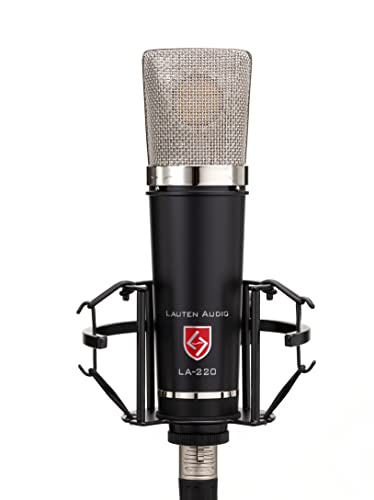
4. Lauten Audio LA-220 V2
The Lauten Audio LA-220 V2 is a fixed-cardioid FET condenser for vocals and instruments. Its high-pass and low-pass filters give you useful tone control before recording, although it does not offer the U87’s alternate pickup patterns.
Pros
- Superb value for money
- Sounds amazing (especially for the price)
- Warm, smooth, and detailed delivery
Cons
- Falls short in sound detail when compared to pricier options
For the given price, the Lauten Audio LA-220 V2 is an incredibly good microphone with a balanced and smooth sound detail. The lows, mids, and highs are on par, especially with the use of the 120Hz high-pass and 12kHz low-pass filters to even out the sound.
As far as alternatives go, this is a great mic to consider if you’re after a well-balanced sound for vocals or instruments.
| Type | Pressure Gradient Condenser |
| Polar pattern | Cardioid |
| Frequency range | 20 Hz to 20 kHz |
| Maximum SPL | 130 dB |
The Lauten Audio LA-220 V2 is an affordable, versatile, and durable microphone that delivers a warm and balanced sound and includes high-pass and low-pass filters to even out your sound.

5. sE Electronics sE2200
The sE Electronics sE2200 is a capable cardioid condenser for vocals and instruments, with more onboard control than many fixed-pattern alternatives. It is a U87 alternative by use case, not a replica of its three-pattern design.
Pros
- Balanced sound
- Very affordable clone
- Low-cut filter
Cons
- Only a Cardioid polar pattern
- Does not measure up to high-end options in terms of sound detail
The sE2200 brings a lot of value to the table, especially for the given price. Even though it features only one polar pattern (Cardioid), it does have a handcrafted 1″ gold-sputtered condenser capsule for consistency in sound.
Additionally, the sE2200 does have an 80/160Hz highpass filter and a 10/20dB pad so you can fine-tune the sound from the onboard options. The best thing about this mic is the low noise design and has high SPL rating so, all in all, it checks all the boxes quite well.
| Type | Condenser |
| Polar pattern | Cardioid |
| Frequency range | 20 Hz to 20 kHz |
| Maximum SPL | 125 dB, 145dB (with pad) |
If you want a cardioid studio mic with switchable filtering and pads, the sE2200 is a useful option. Also, included in the package you will receive a shockmount, a pop filter, and a thread adapter. Talk about value for money!
What To Expect from U87 Clones
Here’s the part you have to be frank with yourself. You need to set your expectations a little bit lower when getting a U87 clone. Some of the key things to note about them are:
They Vary Greatly
Yes, they are clones, but the audio manufacturers simply can’t get them to sound identical to the original. In fact, even Neumann’s U87AI microphones don’t even sound quite the same as the original!
The Warm Audio model offers the U87’s three pickup pattern choices, while the Stellar X2 stays with cardioid. Both can be useful for recording, but their different controls and circuits make a direct tonal match an unsafe assumption.
Putting aside brand power, you can’t get the same sound quality and charm from a clone that’s a tiny fraction of the price. In essence, many of these clones will not sound exactly like the original, but if you choose the right one, you’ll still get a great recording.
Why Is the Neumann U87 So Popular?
Perhaps the main reasons why the U87 is so popular are its reliability, versatility, and overall popularity of use for famous recordings. The U87, one of the pioneers and mainstay in large diaphragm condenser technology, is a classic, and rightly so. It has been manufactured since 1967 and has only undergone moderate modifications during this time.
The microphone can be found in almost every major professional studio; it was one of the founding elements of the typical Neumann sound.
Why Is the Neumann U87 So Expensive?
Neumann microphones are expensive because of their brand reputation, and quality, as well as their relatively high manufacturing costs.
Neumann microphones are made in Germany, and they follow very high standards of production, so they can’t be sold as cheaply as mass-produced microphones in lower-wage countries.
That said, we can’t expect higher manufacturing costs to be the sole reason these mics are more expensive. Neumann microphones have become quite iconic in the recording world, and, as such, can command a much higher price.
Conclusion
To satisfy audiophiles and professionals looking for a taste of the qualities of the Neumann model, manufacturers are experimenting with clones. You’re never going to get a sound exactly like the original, but the options on this list will get you some of the qualities of the signature sound.
My top pick for the closest feature match is the Warm Audio WA87 R2, an 87-style microphone with three patterns, a pad and a high-pass filter.
My budget pick is the Stellar X2, a decent microphone at an affordable price.
Featured image by: “Neumann U87 Condenser Microphone” by Fire At Will [Photography] is licensed under CC BY-SA 2.0