The Heel-Toe Bass Drum Technique – Increase Your Bass Drum Speed
The heel-toe bass drum technique is an efficient method to play fast double strokes on the bass drum. It uses a rocking foot motion; like the moeller technique for hands, the aim is to make repeated strokes with a relaxed movement. This movement puts much less stress on the feet and enables you to achieve higher tempos on the bass drum.
Fast bass-drum doubles have a long history, from big-band players such as buddy rich to drummers working in heavy metal and electronic styles today. Jojo Mayer is one modern player often associated with efficient footwork.
You can hear the value of the technique when two kick notes sound clear and evenly spaced without forcing each stroke.
Here’s a video to get you started:
Contents
How to Play the Heel-Toe Bass Drum Technique
The heel-toe technique involves two parts. The first note comes from lowering your foot into the pedal. Start with your heel raised comfortably, then let the ball of your foot drive the beater for that first note.
For the next part, snap the ball of your foot down while simultaneously raising the heel using the calf muscle. This snap is what pushes the pedal for a second time and creates a double stroke in one rocking motion. Raise your foot back to the initial position to play the next set.
When you get comfortable, you’ll realize that both the notes in the heel-toe technique are actually played using the ball of the foot. Of course, you will have to get in your fair share of practice to get to that point.
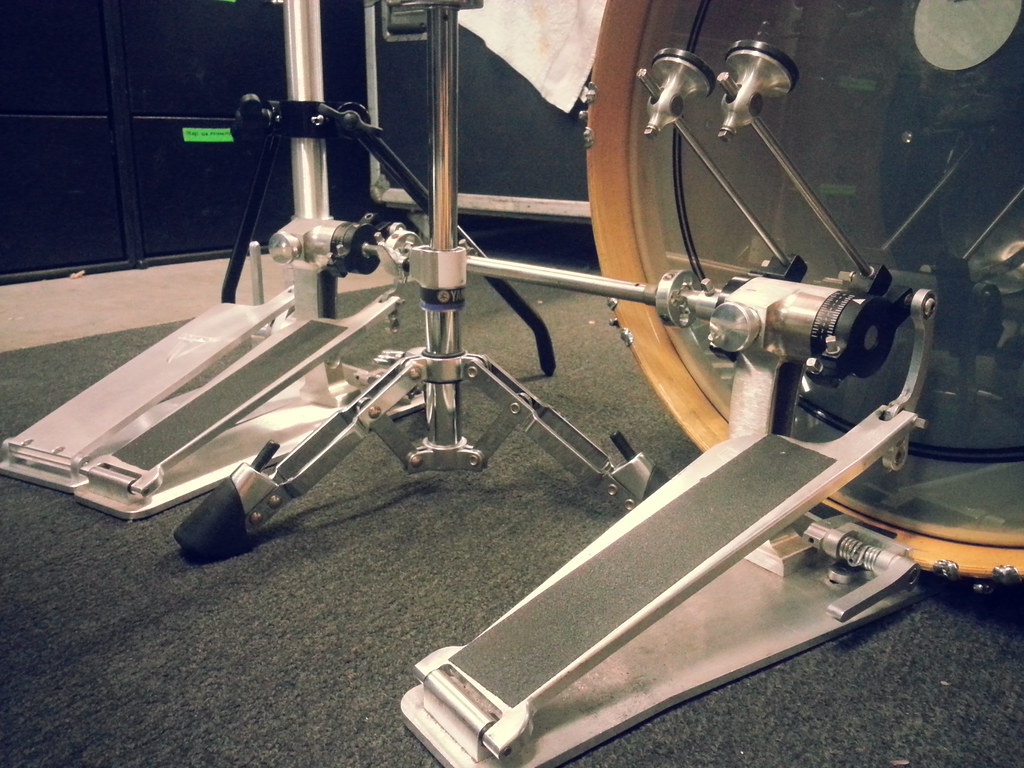
Ideally, you should be getting the best double-bass drum pedal within your budget (or 2 single kick pedals if you’re using 2 bass drums), because kick pedals with efficient and fluid movements make it far easier to perform this motion well and at high speeds.
Mastering the Heel-Toe Technique
Mastering any technique, drums or otherwise, requires time, patience, and dedication. The heel-toe technique is no exception to the rule. Although consistent practice is the best way to build your chops, there are some exercises that you can do to elevate your double strokes.
One exercise to develop muscle memory and clarity is to play pairs of eighth notes slowly with a metronome. Listen for two distinct, evenly spaced hits from each foot motion before raising the tempo. This helps you feel the rocking movement without rushing the second stroke.
If you have a double bass pedal or use two bass drums, you can also dig deeper and play alternating double strokes. Or play double-stroke triplets and even paradiddles. Forcing your feet to play different rhythms will only help you incorporate the heel-toe technique into playing effortlessly.
Benefits of the Heel-Toe Technique
The biggest benefit of the heel-toe technique is how easily it lets you play the bass drum at faster speeds. Your feet are making a single, fluid motion instead of two small jerks.
It’s great particularly for metal drumming where fast kick patterns can make two separate foot motions tiring. Not only are you playing clean notes with the heel-toe technique but you’re also conserving energy. This helps play longer songs and live shows without cramping your legs.
Disadvantages of the Heel-Toe Technique
One huge criticism about the heel-toe technique that seems to be common amongst many drummers is that the strokes can sound uneven. What uneven means in this scenario is that the second note is often softer than the first. This is mostly because you’re using a smaller group of muscles for the second stroke. However, when done correctly, the heel-toe technique can sound very even.
Some drummers also use triggers when playing very fast speeds with the heel-toe technique, to pick up quieter strokes consistently. Set the trigger sensitivity carefully; it does not fix uneven timing or technique.
Conclusion
The heel-toe bass drum technique is a very useful method to get great speed and control from your feet while drumming. The motion is tricky to begin with but practice makes perfect. Be sure to practice with a metronome. Go slow, go steady, and eventually you will get there.
Trust me, all the effort will be worth it when you’ll find yourself playing the bass drum at great speeds without expending too much energy!
Featured image “Trick Drums PRO 1-V Pedals” by sergio_leenen is licensed under CC BY-ND 2.0