Do Electronic Drum Kits Make Noise?

Electronic drum kits are not silent and generate sounds when struck. There is impact noise when you hit the pads with your drumsticks but the noise is not nearly as loud as acoustic drums. Headphones remove the amplified drum sound from the room, but pad taps and pedal vibration remain. Whether that is acceptable in an apartment depends on the kit, how you play and the building.
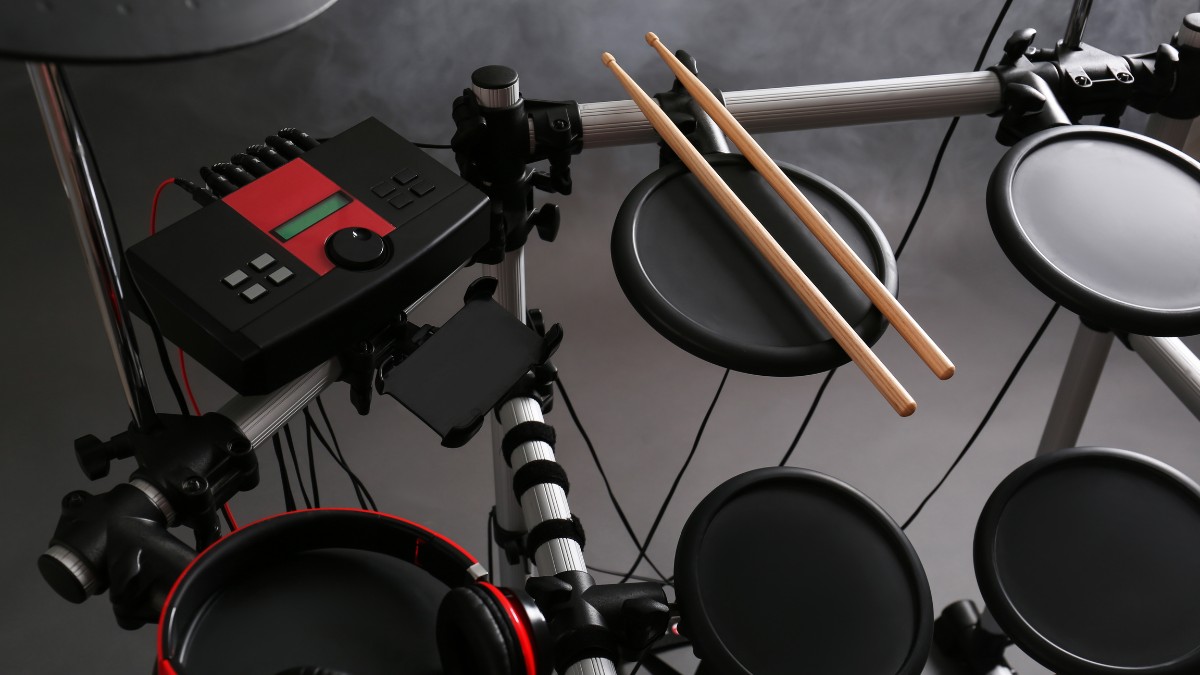
There are a lot of different components in an electronic drum kit that makes a difference when it comes to noise. For example, mesh heads are generally quieter than rubber pads. Thankfully, mesh heads are becoming a standard in e-drum kits for reasons other than loudness. Their tension can be adjusted, and many drummers prefer their rebound. Playing feel and triggering still depend on the particular pad and module.
Other than heads and pads, if you play your e-drum kit in an apartment, the kick and hi-hat pedals deserve particular attention. They can transmit impacts into the floor even when you use headphones. A carpet helps with grip and floor protection, but it may do little for the thumps heard downstairs.
Contents
Are Electronic Drums Loud in an Apartment?
Electronic drums can be relatively loud in an apartment. Vibrations from the kick pedal and tower can be especially noticeable downstairs. This is structure-borne noise, carried through floors and other building surfaces. Even though mesh heads are generally quieter than rubber pads, pad and cymbal strikes still make airborne tapping sounds. These travel through the air and can pass through walls, doors and gaps. Foam panels mainly reduce room reflections; they do not isolate pedal impacts. No mat or pad upgrade guarantees absolute quiet. For a practical setup and practice schedule, see how to play drums in an apartment.
How to Make Your Electronic Drums Quieter?
There are things to consider before buying an e-drum kit. Mesh heads are quieter than rubber pads. But, there is a difference between mesh heads too. Ply count alone does not tell you which pad is quieter. Compare the exact kit’s snare, cymbals and kick mechanism at a similar playing strength. Mesh tension, pad construction and the surface you strike all affect the result.
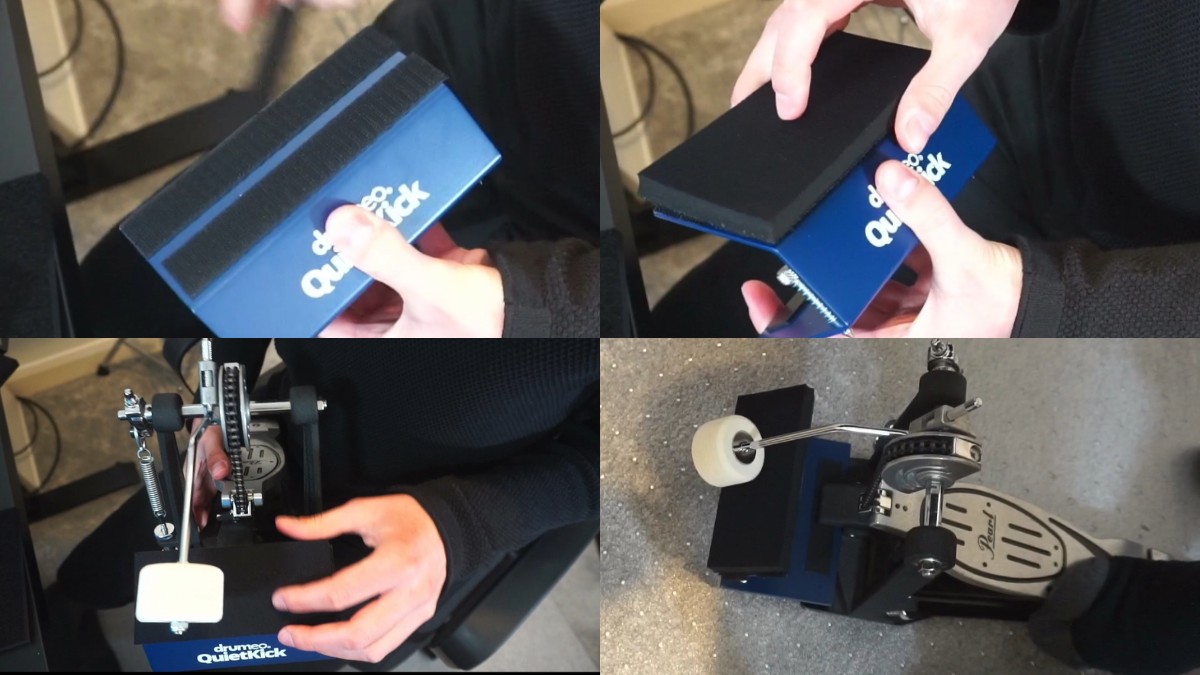
There are also some sound-absorbing beaters you can buy for your kick drum, and they do help by absorbing the impact but they don’t completely solve the volume issue. Check the pad manufacturer’s beater guidance before changing one; felt is unsuitable for some mesh kick heads. After a change, check that soft hits still trigger reliably.
You can also buy or build an isolation platform to reduce vibration transfer into the floor. It needs resilient supports that suit the load; stacking arbitrary foam or carpet is not a predictable substitute. Roland’s NE-10 Noise Eater is a pedal isolation board. Its effectiveness in your building, like a DIY riser’s, must be checked rather than assumed. Our Noise Eater alternatives guide compares the practical options.

How Loud Are Electronic Drums Compared to Acoustic Drums?
The difference between acoustic and electronic drum kits largely depends on the drummer and setup. Unamplified electronic drums are usually much quieter than acoustic drums, but an amplifier changes that comparison. A useful decibel comparison needs the same distance, playing pattern and measurement method; one fixed range cannot describe every kit or the sound in a neighboring apartment.
Playing an acoustic drum set in an apartment is almost impossible due to the noise it produces. E-drum kits make headphone practice possible where full-volume acoustic drums would be impractical, though some apartments still transmit too much mechanical noise.
How Loud Are Different Components of an Electronic Drum Kit?
Many components make up an e-drum kit, some of which are louder than others. Here are some noteworthy things if you want to make some adjustments and make your e-drum kit a bit quieter.
Drum pads can be a prominent source of airborne tapping in the playing room. However, this depends on the sort of drum heads you have on your electronic drum kit. Mesh heads are often a quieter choice than hard rubber pads, but rims and hard hits remain audible.
Cymbals also make a lot of noise, and just like drum pads, some cymbal pads produce more noise than others. The playing surface, internal construction and force of the strike all matter. Do not assume a thicker rubber cymbal will always be quieter.
The pedals make mechanical noise on both acoustic and electronic kits. There are different “thud” sounds, vibrations, clicks and squeaks. A pedal that sounds modest beside the kit can still be the main disturbance downstairs; test the kick and hi-hat separately.
Drum shells and rims can also contribute noise. Rim strikes and loose hardware may be audible even on a mesh-head kit. Shell size alone is not a reliable quietness guide; check the exact pad and keep the rack secure without letting it touch a wall.
Conclusion
When it comes to noise in electronic drum kits, the most important thing is to know that they are not completely silent. Though, they are way quieter than acoustic drum sets!