Why Do Drummers Sit Behind Screens?
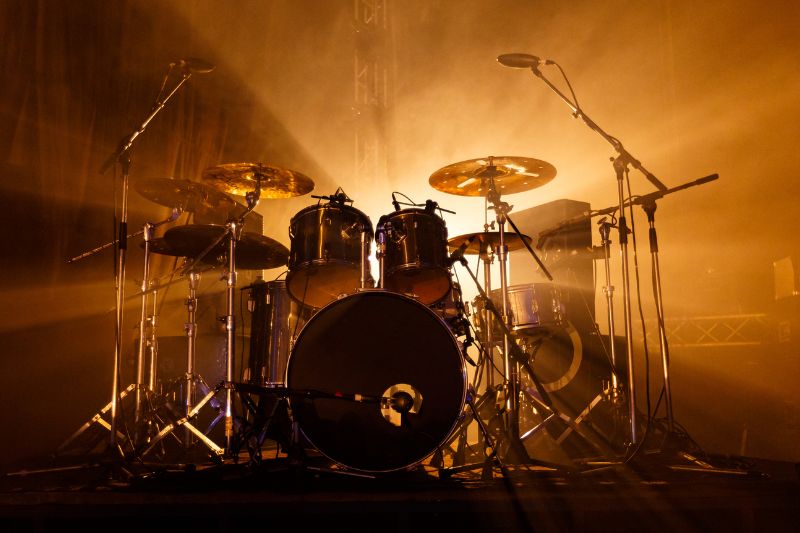
Drum screens, or drum shields, are large panels made of acrylic and mainly exist for two reasons. Firstly, they redirect some of the drum sound so it does not overwhelm nearby instruments. Secondly, they reduce the sound that other microphones on stage pick up.
Drummers sometimes set up drum shields in front of them, as you may have noticed on more than one occasion. This is very common in churches and smaller venues. The question is, why do drummers do this? What is the main benefit? Which factors determine if a drum screen is needed? Let’s find out.
Contents
What is a Drum Screen/Shield and why is it used?
A drum screen (or drum shield) is a set of clear acrylic panels placed around part of an acoustic drum kit. The panels redirect sound and can reduce drum spill into nearby vocal and instrument microphones. They do not absorb sound or make the whole room quiet on their own; the result depends on panel position, room surfaces, and any added absorbent material.
Why smaller venues?
A shield can help in a church, theater, or small venue when the acoustic kit spills into nearby microphones or dominates the stage mix. Seat count alone does not decide whether one is useful. First listen to the room, the drummer, and the vocal microphones, then position the panels to block the most troublesome direct path. Drum shields are one option.
Besides churches and small venues, theaters and venues designed for good acoustic sound also have this problem with drums. Imagine setting up a drum set in a venue with 750 seats, acoustically designed so that you can hear the person on stage talking quietly. Now, imagine, instead of talking quietly, playing the drums with all the energy that a live performance brings. It would be louder than you being in the actual room with the drummer.
Drum shields give sound engineers a way to deflect some direct drum sound. Acrylic reflects rather than absorbs it, so hard walls behind the drummer can send sound back onto the stage. Absorbent panels behind or inside the shield can help control those reflections. The drummer still needs a comfortable monitor mix and should not assume that a shield makes loud playing harmless.
Do Drummers Like Drum Shields?

We know that sound engineers love drum shields, but what about the drummers? Well, everyone has a different opinion. Some drummers feel enclosed and left out, and some even feel like out-of-control “sound maniacs” that must be caged to play with proper dynamics.
Others (and this is the more popular opinion) love the drum shields. Most drummers love to play freely behind a drum shield without anyone (most likely a sound engineer) telling them to play softly on the cymbals and maybe hit the snare harder, therefore not appreciating the hours they have spent practicing drum dynamics.
Downsides of Using Drum Shields
I’ve talked a lot about the pros of using drum shields, but they also have some cons, and it’s better for you to understand them before investing in improving the sound of the drums in a live performance setting.
Even though there are a lot of different types and sizes of drum shields, more often than not, being behind these can get very hot, very quickly. You’ve probably never tried this (or at least I hope you haven’t), but try air-drumming for 5 minutes in a closed car, breathing heavily on the windshield. Actually, I take that back, don’t try it. Just trust my word on it, it’s pretty bad.
Also, I touched briefly on this before. Some drummers feel “disconnected” from the audience when they play behind big screens made of glass. Something like drum shields, to some, can break the experience of delivering the sweet emotions that you sweat through on stage.
Are Drum Screens/Shields Expensive?
Cost depends on panel height, width, thickness, hinges, and whether the setup includes absorbent panels or a lid. A larger enclosure can provide more isolation, but a thicker or more expensive panel is not automatically the best solution for every room. Match the arrangement to the spill you need to control.
For a useful comparison, measure the available stage space, check sight lines and access to the kit, and ask whether the quoted system includes absorption and ventilation. Prices change by supplier and configuration, so compare complete systems rather than a single panel price.
Conclusion
A drum shield can improve a live mix when drum spill is the problem, especially alongside thoughtful microphone placement and absorption. It is one option rather than a requirement for every performance. Try the panel position and monitor mix in the actual room before deciding whether a larger enclosure is worthwhile.
Tris Imboden Image by: Ken Young, CC BY-SA 3.0, via Wikimedia Commons