10 Essential Tips to Teach Yourself Drums
You can teach yourself drums if you have the dedication, discipline, and willingness to practice. With a few tips as well as the massive video content available today, being a self-taught drummer is not far from reach.
Before we get into it, one of the most critical pieces of advice when starting to learn the drums is the concept of “learning to walk before you run.” you should try your best to master the basics before increasing your speed and moving onto more complex techniques and rhythms.
There was a time I didn’t have my drum kit. I started practicing using a pair of drumsticks and a tabletop. My parents weren’t thrilled with the noise, but it helped me maintain my practice routine. If your gear is limited, just work with what you have and do your best!
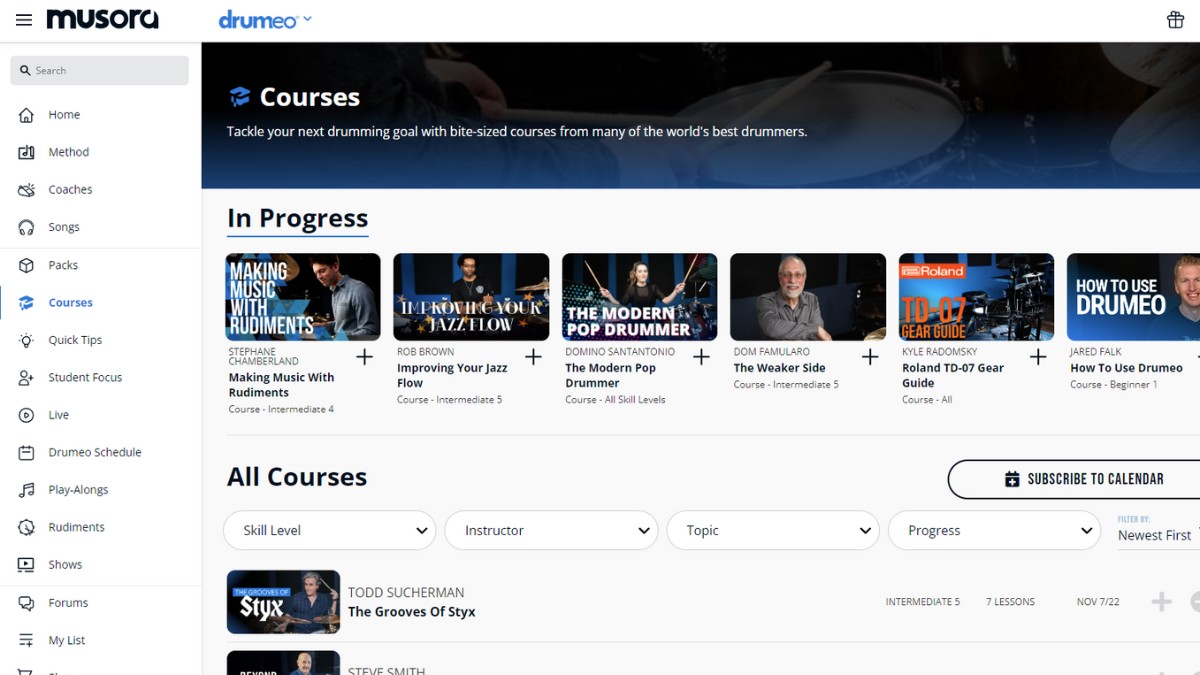
Drumeo is my recommendation as the best learning platform online for drums. They have a free 30-day trial and they are perfect for drummers that want to teach themselves at home.


Contents
- Tips to Teach Yourself Drums – At a Glance
- 1. Start a Practice Routine
- 2. Develop Proper Form and Posture
- 3. Learning Basic Drum Beats
- 4. Learning Drum Fills
- 5. Get a Metronome to Stay in Time
- 6. Learn the Basics of Drum Notation
- 7. Learn the Drum Rudiments
- 8. Learn and Play your Favorite Songs
- 9. Be Yourself
- 10. Protect Your Hearing
- Is it hard to be a Self-taught Drummer?
- Conclusion
Tips to Teach Yourself Drums – At a Glance
- Consistency is Crucial: Establish a routine to ensure regular and disciplined practice.
- Master the Basics: Start with simple beats, fills, and rudiments, gradually advancing to more complex patterns.
- Posture and Technique Matter: Pay attention to correct form, posture, and stick grip for better performance and injury prevention.
- Use Learning Tools: Use a metronome for timing, understand drum notation, and play along with songs to enhance your skills.
- Individuality and Safety are Important: Develop your unique drumming style and always protect your hearing during practice and performance.
1. Start a Practice Routine
Learning to play an instrument is all about practice. The first thing you should do is establish where, when, and how you are going to practice playing the drums. If you don’t have a place to practice, then you’re not going to be able to keep up the discipline and routine that’s required to learn any musical instrument.
First off, get drumsticks and a practice pad, an electronic drum kit, or an acoustic drum kit. If possible, you should have something you can practice on.
Alternatively, if you don’t have any of these, or if it might take a few days or weeks for your drum pad or set to arrive, then that’s fine. You can practice the basics of drumming without drums.
You can also just get a cheap pair of drumsticks and practice on a table or pillow (though make sure you’re not going to do any damage first!).
2. Develop Proper Form and Posture
This is something you should pay close attention to at the beginning. Developing proper form and posture right from the get-go is extremely beneficial and will save you a lot of time and ache.
First of all, adjust your drum throne so your hips sit comfortably level with or slightly above your knees, then place the pedals where your feet naturally fall. Keep an upright but relaxed posture, with your shoulders loose. You should be able to move both feet without sliding forward, twisting your legs or bracing against the snare.
Lastly, position your feet properly so that everything is within reach without strain. Build the rest of the kit around the pedals and snare, then check that you can reach the toms and cymbals without stretching or lifting your shoulders. If something feels awkward, adjust its position before trying to play faster.
3. Learning Basic Drum Beats
Check out some great beginner drum lessons, courses, and/or drum books. I highly recommend Drumeo as a great place to start. You need to figure out the basics of how to:
- Put your drum set together
- Sit properly behind your drum set (very important for the health of your back)
- Properly hold your drumsticks
- Basics of timekeeping
It’s very important to get the foundations right. Once you learn how to hold your drumsticks properly, it makes drumming a lot easier. This is because you’re working with the drumsticks rather than getting in the way of them!
Make sure to watch the video above, which is a great first drum lesson to get you started playing drums. This will show you how to play a very basic beat and will be very rewarding once it feels easy to play.
Playing drums might seem difficult at first. It might seem difficult to try to coordinate your limbs together. You will eventually get there; just believe in the process and keep practicing. Try a short session on a basic rock beat, and notice which combination of limbs needs more work. Start with the hi-hat and snare, add the bass drum slowly, and return to two limbs if the pattern falls apart. Progress takes different amounts of time for different beginners.
After that, you can move on to more complex rhythms and drum beats.
4. Learning Drum Fills
Drum fills are the next building block of playing drums. A regular drum beat will make up the majority of your song. A drum fill varies the regular pattern to mark a transition or add interest, while the underlying pulse continues. It can last just a beat or take up a whole bar; its ending needs to lead clearly into the next groove.
It often includes a tom roll, crashes of the cymbals, or simply a change in the beat that will add a bit to the groove. The video above is a great example of some beginner drum fills.
Now, go back to the drum beat from the first section and try to add in a drum fill. If you have a drum set, then just go for it and enjoy the process. It doesn’t have to sound great for starters, but just get in the zone of mixing up the beat a little. Try three bars of the groove followed by a one-bar fill, count all four bars aloud, and aim to land the next bass drum and cymbal together on beat one.
5. Get a Metronome to Stay in Time
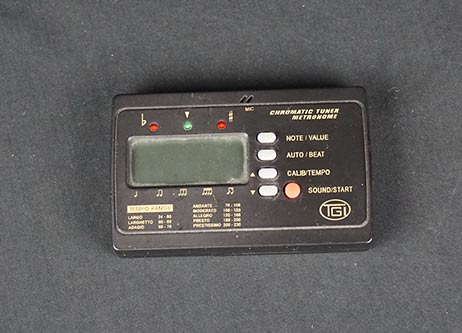
Metronomes might sound super boring, but they are one of the most important tools for a drummer. There are many good metronome apps for drummers. Otherwise, you can get your hands on a standalone metronome for drummers.
Tempo is measured in BPM (beats per minute); timing is how accurately you place your notes within that pulse. Practice your regular drum beats and fills to a metronome, counting the beats as you play. If the notes become uneven or you lose track of beat one, slow the BPM down and shorten the exercise.
Always practice playing things slowly, and only speed up when you feel comfortable doing so. Many recording sessions use a click track, while others follow the band’s live timing. Learning to keep a steady pulse will help in either situation, especially when you move from the groove into a fill and back again. Once you learn some basic beats, then you can go to the next level and learn some easy drum songs for beginners.
It’s really rewarding to play songs on drums. You are probably inspired by a particular drummer. Have a look through that drummer’s collection of recorded songs; some of them might be relatively easy to play. Just play the song in the background and play over them.
Balance playing songs with focused practice on the beats and techniques you find difficult. A useful routine is to choose one tricky part from a song, practice it slowly on its own, then play it again in context. It’s very beneficial to learn a few songs because it gives you confidence and keeps you motivated. Once you’ve had fun and gotten the achievement of learning new songs, then go back to the basics and keep practicing your drumming technique.
6. Learn the Basics of Drum Notation
This might sound very boring at first, but an essential element of being a drummer is knowing how to read drum sheet music. The majority of experienced drummers at least know the basics of drum notation.
Once you know the basics, you can pick up a drum score and start playing it. Once you have mastered the basics of drums, then getting a good drum book is definitely worth doing.
It’s really great to be able to sit behind your drum kit and play from drum notation. It can lead to a much more efficient and effective method of practice because you don’t have to scroll back over videos.
7. Learn the Drum Rudiments
The drum rudiments are a set of very common and useful sticking patterns that can be used as building blocks to drum beats and fills.
The most important drum rudiments are single-stroke rolls, double-stroke rolls, paradiddles, and flams. These are useful starting points within the wider rudiment collection, which also includes drags and rolls with different note groupings. Keep the single strokes even, listen for both notes of each double, and leave a clear main note after the grace note in a flam. Learn the rudiments well and play them at different speeds on your practice pad, then bring them to the drum set!
8. Learn and Play your Favorite Songs
Having fun is a huge part of learning how to drum and keeping up with your practices. If it’s not fun, many people will likely get discouraged or bored pretty soon and give up, so, to prevent this, learning your favorite songs on the drums is recommended.
For example, pick an entire album from your favorite band and play it fully through. It doesn’t have to be perfect, just stick with it. It is a great way to stay motivated and will help you stick with your practice routine.
9. Be Yourself
While all beginners are prone to copy and follow in their favorite drummer’s footsteps, being yourself is probably the best thing you can do. If you want to imitate your favorite drummer, that’s alright, at first. However, develop your own style as you go along.
Try things your way, even if it doesn’t make sense. Playing what comes naturally to you is probably the best thing you can do on the drums. Before you know it, you’ll have your own style and won’t try so hard to be someone else.
10. Protect Your Hearing
You must protect your hearing. Use properly fitted earplugs designed to reduce the sound reaching your ears when you play at loud levels. If you use in-ear monitors for drummers, check how well they isolate the outside sound and how loudly you are listening. In-ear monitors are not automatically hearing protectors: their isolation, fit and playback level all matter. Keep the monitor mix low, reduce the overall volume and take quiet breaks. Loud sound can cause permanent hearing damage or tinnitus, so avoid turning up headphones to compete with an acoustic kit.
Is it hard to be a Self-taught Drummer?
As with all instruments, learning to play is hard on its own but being a self-taught musician is no harder than being an educated one. It’s just a matter of different approaches and the results might vary based on the time spent.
Spending some time and even taking a few drum lessons will always be beneficial with a trained professional who can make sure you don’t develop bad habits from the start. However, with massive video content available today, being a self-taught drummer is easier than ever!
Conclusion
Playing a musical instrument can be challenging. With a bit of dedication and interest, just keep going, and you will get there eventually. If you keep trying, you will look back in a few weeks and be very proud of how far you have come with your drumming.
Go for the small wins early on. Learn some basic rhythms, fills, and songs. Master them well, and then move onwards and upwards. The reason why I recommend Drumeo so highly is that they provide a very solid 10-level curriculum to get started.
Although this article is all about teaching yourself drums, it’s great to at least get one or two lessons from a great drum instructor to set you on the right path.