The 4 Best Electronic Snare Drums (2026)
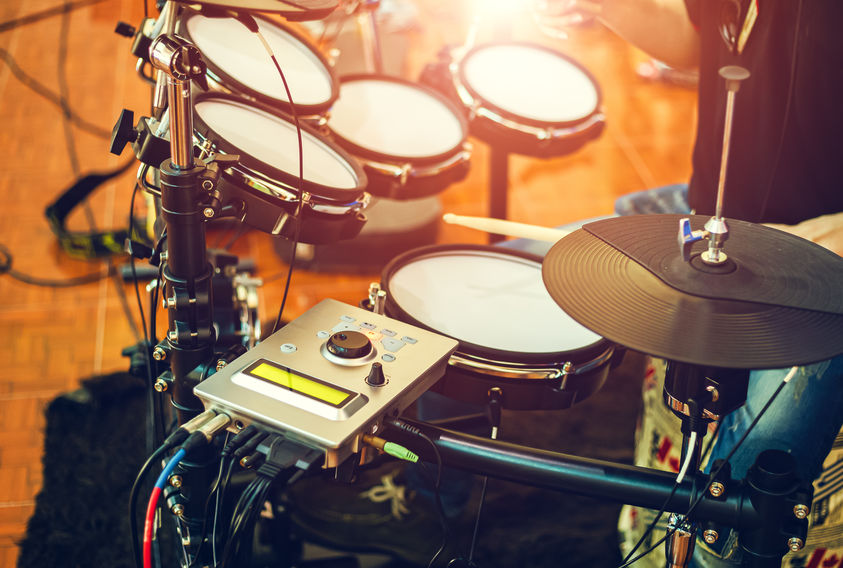
An electronic snare drum is one of the most important items of your set. Drummers often consider upgrading their electronic snare drum for improved sensitivity, larger pad size, and more triggering options (e.g. dual-zone or 3-zone pads).
If you are thinking about upgrading your electronic snare drum, there are many options to consider from top-tier electronic drum set manufacturers like Roland and Yamaha.
My top recommended electronic drum snare is the Roland PDX-12 Dual-Trigger Mesh Snare Pad. This is an all-around, tunable head by a well-renowned manufacturer.
My second recommended electronic drum snare is the Roland PDX-6 Mesh Pad. This is an affordable option with great value for money.
Contents
- The 4 Best Electronic Snare Drums (2026)
- 1. Roland PDX-12 Dual-Trigger Mesh Snare Pad
- 2. Roland PDX-6 Mesh Pad
- 3. Roland PD-12P V-Pad
- 4. Yamaha XP80 Three-Zone TCS Pad
- How to Connect an Electronic Snare Drum to Your Module
- Different Types of Electronic Snare Drum Heads
- Where to Use Electronic Snare Drums
- How do Tunable Electronic Snare Drums Heads Work?
- Summary
The 4 Best Electronic Snare Drums (2026)


Let’s compare these in more detail.
1. Roland PDX-12 Dual-Trigger Mesh Snare Pad
My top pick is the Roland PDX-12. This 12-inch, dual-trigger mesh pad gives you separate head and rim sounds, along with enough playing space for rolls and rimshots. I would choose it as a straightforward larger snare upgrade when the module supports its trigger type. The pad itself does not generate sound: the connected module determines the sounds and how its inputs interpret your playing.
Pros
- Good for stick work and rimshots
- Compact design with great playability
- Excellent value for money
- Renowned manufacturer
Cons
- Module compatibility and mounting still need checking
What makes the Roland PDX-12 dual-trigger mesh snare pad great is the tunable head. This way you can control the rebound of your drumstick. The 2-ply mesh material hits the sweet spot between resistance and rebound.
All in all, this is a great large pad for anyone looking to get a quality-made electronic snare drum for their e-drum kit.

2. Roland PDX-6 Mesh Pad
If you want a compact mesh snare without paying for a larger playing surface, the Roland PDX-6 is worth considering. It retains head and rim triggering in a smaller format. That makes it useful for a beginner kit, an extra pad or a crowded rack, though I would favour the PDX-12 if room for snare technique is the main reason for upgrading.
Pros
- Dual-trigger pad
- Excellent value for money
- Compact, small design
Cons
- Small 6.5-inch playing surface may feel cramped
The PDX-6 has a 6.5-inch mesh playing surface inside a wider hoop. Its head and rim triggers let a compatible module distinguish between the two zones. The compact head is the main trade-off: it saves space, but offers less room for stick movement than the 12-inch pads here. Check the module’s pad-type settings before assuming it will be a direct replacement for your existing snare.
This is a great buy for any house practice set and a great buy for any beginner to learn the basics of drumming. Overall, when it comes to beginner-friendly and budget-friendly options, you’ll unlikely find something better for the price.
3. Roland PD-12P V-Pad
For a player seeking a more refined analog pad, I would consider the Roland PD-12P. It uses a 12-inch mesh head with three piezo sensors arranged to provide a more even response across the playing area. The appeal is consistent triggering and a comfortable rim, rather than a promise that changing the pad alone will make every module sound more realistic.
Pros
- Tunable mesh feel and separate head/rim zones
- Even response from three piezo sensors
- Dual-zone, tunable mesh design
- Advanced triggering
Cons
- Pricey
- Confirm local availability and supported module settings
The PD-12P has separate head and rim zones, a tension-adjustable mesh head and a hard rubber rim with chrome hoops. Adjusting the head tension changes stick rebound; adjust the module’s trigger parameters separately for sensitivity and dynamics. Roland lists compatibility with a wide range of V-Drums modules, but consult its settings guidance for your particular module before ordering. It is an analog pad, so do not confuse it with a digital USB snare such as the PD-140DS.
This is a specialist upgrade for a player who already knows which trigger input and mounting arrangement will be used. Roland supplies a connection cable and drum key; mounts and stands are separate purchases. Its 9–13 mm rod-mount specification is worth checking against your rack. The Thomann offer is the buying option here; US readers should check shipping and delivery before ordering. If you mainly want a larger mesh surface for practice, the PDX-12 is the simpler starting point.
4. Yamaha XP80 Three-Zone TCS Pad
Yamaha is a household name in electronic drum equipment and their DTX series proves as a very worthy contender. The Yamaha DTX XP80 3-Zone 8″ Drum Pad is a great and modestly-priced option to consider.
Pros
- Compact, three-zone design
- Three zones on compatible Yamaha module inputs
- Good value for money
Cons
- Rather small pad for some
Some drummers love the feel of the Yamaha DTX silicone heads. They are less bouncy than mesh heads but still provide a very strong acoustic feel to them. This 8” pad has three trigger zones. Since it’s 8”, it’s compact and doesn’t take up too much space.
All in all, the XP80 is a compact three-zone option for a player who prefers Yamaha’s silicone surface. Its head, open-rim and closed-rim zones require a compatible module input to work as intended. I would choose it for a suitable Yamaha setup rather than treating the familiar cable socket as proof of universal three-zone compatibility. If you prefer a tension-adjustable surface, the Roland mesh options are the more relevant comparison.
How to Connect an Electronic Snare Drum to Your Module
Connecting your electronic snare drum starts with the pad and module compatibility, then the cable. The pads on this list use standard 1/4-inch trigger connections, but a matching socket does not guarantee that all zones or advanced triggering features will work. Check the drum module manual for the supported pad type, use the correct trigger cable and select the appropriate pad setting. After connecting, test head and rim hits, soft notes and rolls before adjusting sensitivity, threshold or crosstalk settings. A pad also needs a module, audio output and headphones or amplification to be heard.
Different Types of Electronic Snare Drum Heads
As you may have noticed, there is a difference in the type of drum head materials different producers use for their products.
The Roland pads selected here use mesh heads. Mesh gives you a tension-adjustable playing surface, so you can choose a firmer or softer rebound within the pad’s recommended range. That flexibility is one reason to consider a mesh snare when upgrading from a rubber pad.
The Yamaha XP80 uses TCS (Textured Cellular Silicone). Its surface offers a different stick response from tension-adjustable mesh, and your preference matters more than treating one material as universally better. If possible, try both types of head before choosing, and check module compatibility alongside playing feel.
Where to Use Electronic Snare Drums
Electronic snare drums can be used both as a part of a drum set or as a standalone instrument. As a part of your electronic drum kit, you can always replace and upgrade your snare drum to get a better sound when playing.
Of course, you don’t need a full drum kit to make use of your electronic snare drum. You can also use it as a part of your live performance if you’re into electronic music, by connecting the snare drum pad to a drum trigger module or sample pad.
How do Tunable Electronic Snare Drums Heads Work?
Tunable mesh heads let you change the tension of the playing surface. Turning the tension rods with a drum key tightens or loosens the mesh, giving you more or less stick rebound. Work evenly around the head and follow the pad manual rather than making one side much tighter than the other. This is a feel adjustment, not an acoustic tuning change to the module’s snare sample. Set trigger sensitivity in the module and check it again after a substantial head-tension change.
Summary
I hope that this article has helped you learn something new about the electronic snare drum market. Whether you’re looking for a simple upgrade for your home kit or a professional buy for your studio setting you can find something for yourself on this list.
My top pick is the Roland PDX-12 Dual-Trigger Mesh Snare Pad, an all-around, tunable head by a respected manufacturer.
My budget pick is the Roland PDX-6 Mesh Pad, a compact dual-zone mesh option for a suitable module. Choose it for the smaller footprint and practical value, with the understanding that its playing surface gives you less room than the PDX-12.