The 10 Best AutoTune Plugins (Free and Paid Options)
AutoTune plugins are useful for touching up vocal pitch and creating deliberate vocal effects. These 10 free and paid options cover automatic correction, detailed note editing and complete vocal processing.
For straightforward automatic correction, Antares AutoTune is a useful starting point. MAutoPitch and Graillon 3 Free are good places to begin without buying a licence. If you want to move individual notes in a recorded take, look at Melodyne 5 Essential instead.
The real-time plugins below tune audio as it plays. Studio editors such as Melodyne and Revoice Pro work on recorded performances; their deeper editing controls serve a different purpose from hearing a tuned vocal while you sing.
Contents
Check the edition as well as the product name. A full licence, an upgrade, a subscription and a free edition give you different rights to the software. The free recommendations here provide usable pitch correction without a time limit.
1. Antares AutoTune
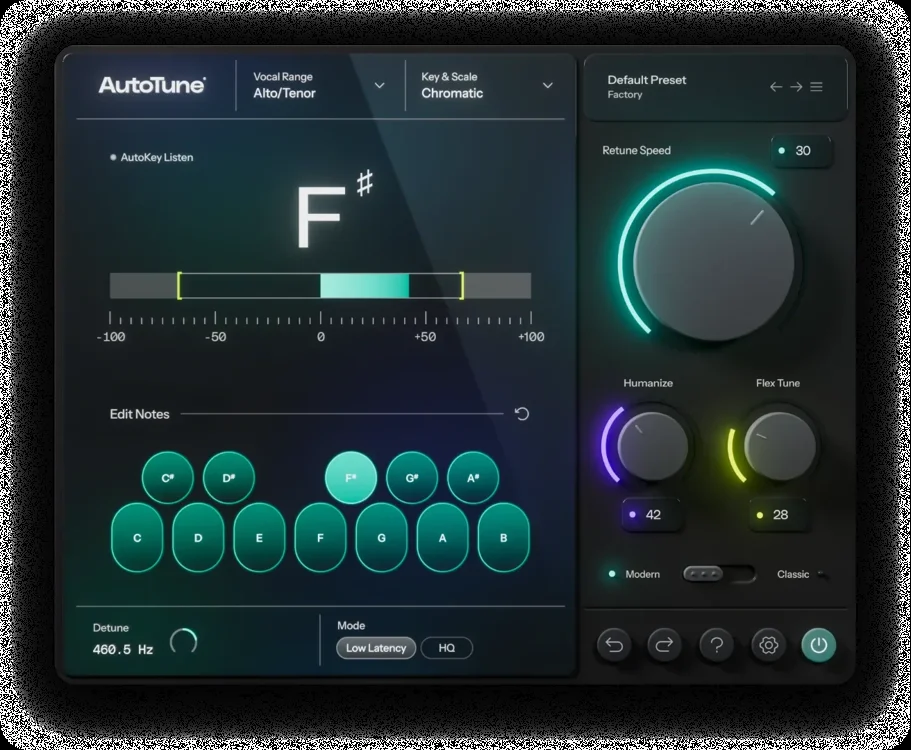
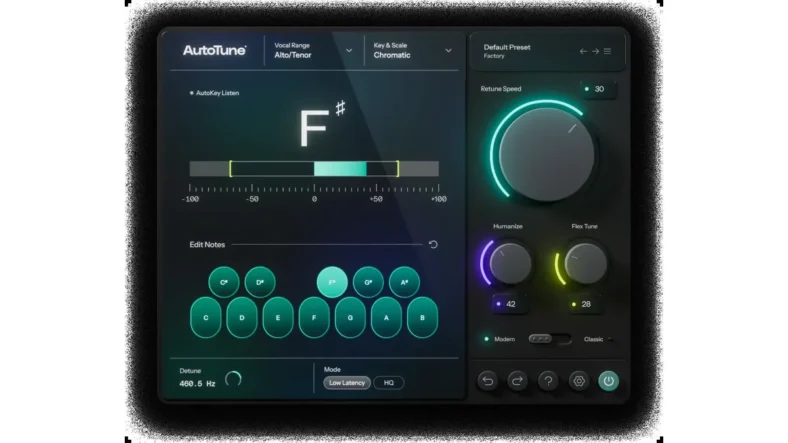
Antares AutoTune is a straightforward choice for automatic vocal correction while you record or mix. The current plugin was originally called AutoTune 2026; Antares now calls the same product AutoTune. It gives you more useful control than the old Access edition, with Retune Speed, Humanize and Flex Tune controls for choosing how tightly the vocal follows the scale.
For a more natural result, give sustained notes some movement with Humanize and let expressive approaches to notes pass through with Flex Tune. Faster retuning and Classic mode suit the familiar stepped vocal effect. Set the song’s key and the singer’s vocal range first: a tuner following the wrong scale can move a good note somewhere you never intended.
This is a host plugin for Windows 10/11 and macOS 14 or newer, in VST3, AU and AAX formats where supported. You can buy the full licence or use it through AutoTune Unlimited. Installation and activation use AutoTune Central, with two simultaneous activation locations on computers or physical iLoks. It does not include the note-by-note Graph Mode editor found in Auto-Tune Pro.
Pros
- Useful controls for subtle correction and hard tuning
- Suited to monitoring a vocal through a compatible DAW
Cons
- No graphical note editor
2. MAutoPitch (Free)
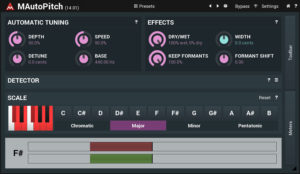
MAutoPitch is a useful free alternative if you want to correct a single vocal line without buying a vocal suite. Its automatic correction works on vocals and other monophonic instruments, with Depth and Speed controls to decide how strongly and quickly it pulls notes into tune.
There is also a formant control for changing the apparent character of the voice and stereo expansion for spreading a backing part. Those creative controls give it a purpose beyond repairing a slightly flat note. Keep your lead dry enough to remain clear, then try wider settings on a separate backing vocal.
It comes in MeldaProduction’s MFreeFXBundle. The tuning is free; the optional paid bundle extension unlocks extra conveniences, so do not buy it simply to obtain pitch correction. MAutoPitch needs a compatible 64-bit host on Windows 10/11 or macOS 10.14 or newer. Melda supplies VST, VST3 and AAX, plus AU on Mac; it is not a standalone recording app.
Pros
- Free automatic pitch correction
- Formant shifting and stereo expansion
Cons
- No note-by-note graphical editing
3. Melodyne 5 Essential
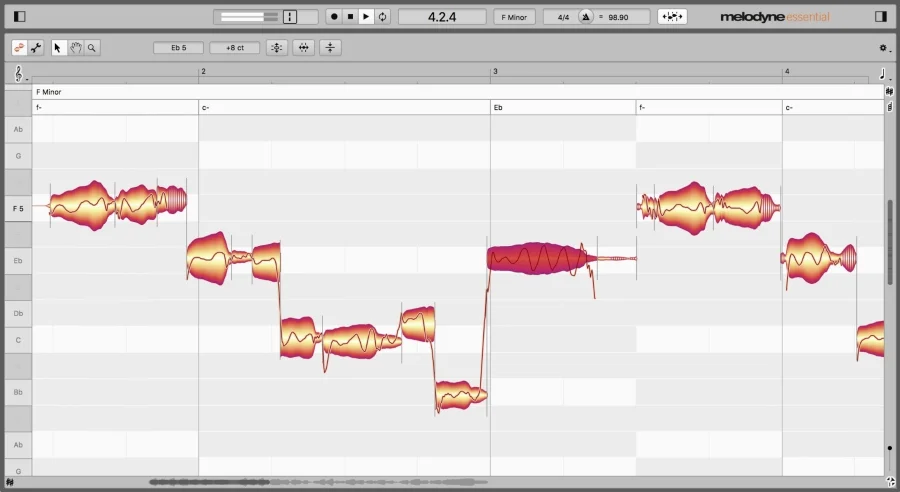
Melodyne 5 Essential is a better fit when you want to fix a recorded performance one note at a time. Its note display lets you see a phrase, select the notes that need attention, and adjust pitch, position or length with the Main Tool. Pitch and timing macros also make it possible to correct a passage without moving every note separately.
Essential uses the same underlying sound technology as the larger Melodyne editions, but it does not include their complete editing toolkits. It cannot edit individual notes inside a piano or guitar chord with DNA, and it does not include Studio’s Sound Editor. Choose it for basic vocal and monophonic instrument edits rather than for those higher-edition features.
It runs as a standalone editor or a VST3, AU or AAX plugin, with ARA integration in compatible DAWs. The published standalone minimums are Windows 10/11 and macOS 10.12, though your DAW may require a newer system. Apple Silicon is native from Melodyne 5.2. Essential uses computer-based activation with internet access for the initial activation; the linked offer is the full Essential licence, not an upgrade.
Pros
- Precise pitch and timing edits on recorded vocals
- Standalone operation and compatible ARA integration
Cons
- Does not tune a singer in real time
- Essential has a smaller editing toolkit than Assistant, Editor and Studio
4. Slate Digital MetaTune
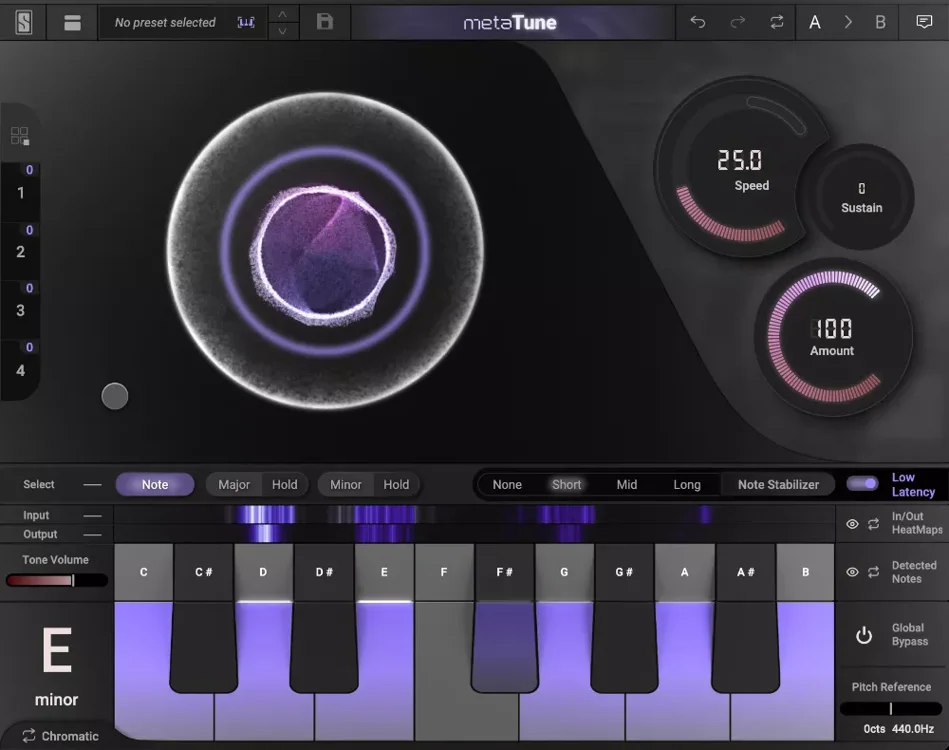
MetaTune combines automatic pitch correction with a built-in vocal doubler. It is worth considering if you want a thicker vocal as well as tighter tuning: you can handle the correction and widening in one plugin, rather than using a thickener that never fixes the original note.
The Speed control reaches negative settings for a pronounced tuning effect, while Note Stabilizer helps control unwanted note switching. HeatMaps show where the incoming notes land. Grouped instances are particularly useful for a stack of backing vocals because changing a shared setting can update the other instances in the group.
The individual product is available as a perpetual licence, separately from Slate’s subscription. It requires a compatible 64-bit host and a free iLok account; the individual licence supports machine or iLok 2/3 activation. Slate’s current supported systems are macOS 14 or newer and Windows 11, with Windows 10 listed as the minimum. AU, VST, VST3 and AAX support depends on the platform.
Pros
- Automatic tuning and vocal doubling in one plugin
- Grouped settings for multiple vocal tracks
Cons
- No graphical note editor
5. Waves Vocal Production
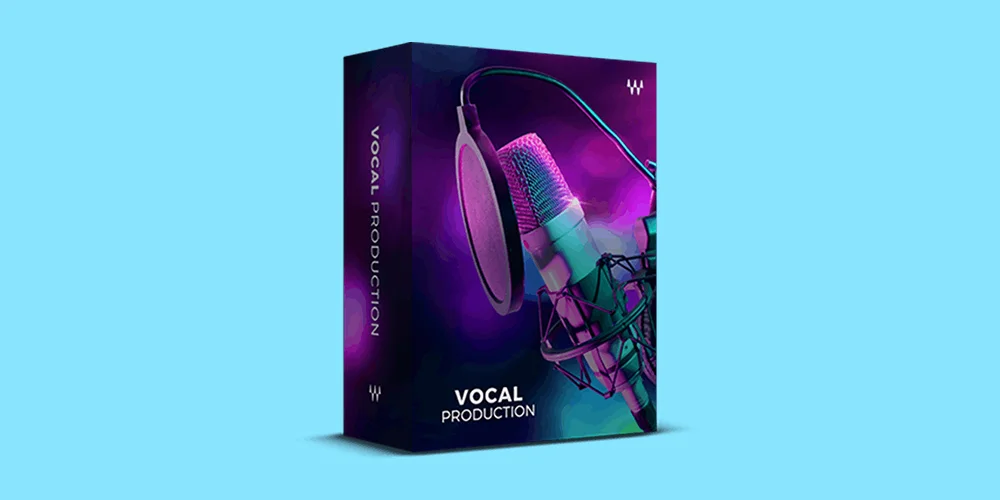
Waves Vocal Production is the broader option for someone who needs a vocal mixing toolkit as well as tuning. The current bundle includes Waves Tune, Tune LT and Tune Real-Time, alongside processors such as DeBreath, Renaissance Vox, Sibilance, Vocal Rider, Doubler and Waves Harmony. It is a much larger package than the old six-plugin Vocal Bundle.
Use Tune for editing a recorded part and Tune Real-Time for automatic correction during tracking or live work. The other tools address different jobs: DeBreath helps control breaths, Sibilance handles sharp vocal consonants, Vocal Rider follows vocal levels, and Doubler or Harmony creates additional layers. These are separate plugins, so you can build the chain around the recording rather than loading everything at once.
The linked offer is the full Vocal Production bundle. For the current V17 plugins, Waves lists Windows 10 22H2/Windows 11 or a supported Apple Silicon Mac on macOS 14 or newer, with 16 GB RAM. Check the supported VST3, AU and AAX host workflow for your system. Register the supplied serial in your Waves account, then install and activate through Waves Central. A perpetual licence keeps the purchased version usable after its included Waves Update Plan coverage ends; later major-version updates are a separate entitlement. Use Waves’ current host and operating-system compatibility matrix when installing, rather than assuming an older Waves installer supports a new system.
Pros
- Tuning, dynamics, de-essing and creative vocal tools together
- Includes both recorded-note and real-time tuning workflows
Cons
- More software than you need for pitch correction alone
6. Waves Tune Real-Time
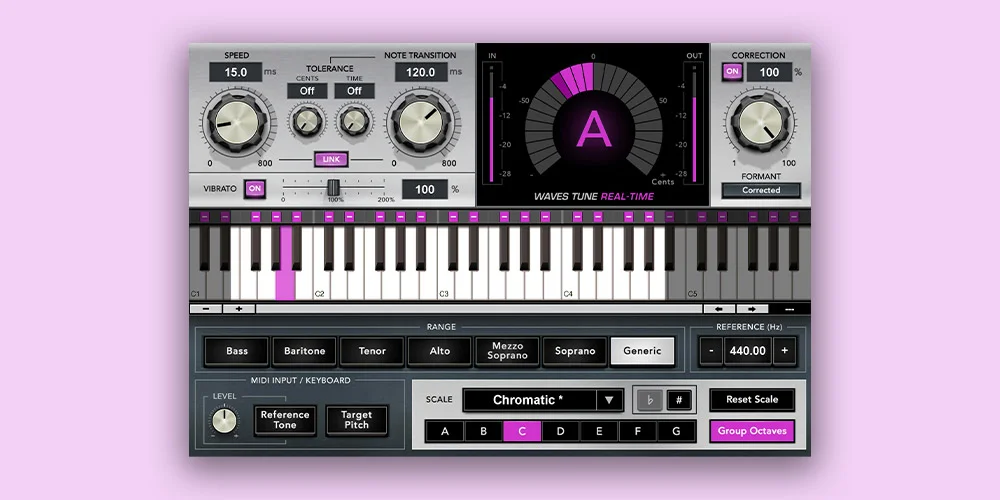
Waves Tune Real-Time is a focused alternative to buying the whole Vocal Production bundle. It corrects a monophonic vocal as it passes through the plugin, letting the singer hear the tuning while recording. You can set a scale or send MIDI notes from a compatible host to control the target pitches.
Speed and Note Transition controls shape the movement between notes, while formant correction helps retain the character of the voice. It can make small pitch adjustments or a much more obvious tuning effect. Low plugin latency helps with monitoring, but your audio interface, buffer size and the rest of the session still affect what the singer hears.
This is a separate product from Waves Tune: it does not give you Tune’s recorded-note editing display. It runs inside a compatible host on Mac or Windows and uses Waves Central for installation and activation. Waves V17 requires Windows 10 22H2 or Windows 11, or a supported Apple Silicon Mac running macOS 14 or newer, with 16 GB RAM. Native formats include VST3, AU on Mac, and AAX in supported hosts. The linked full licence is perpetual, with future major updates governed by Waves Update Plan rather than an ongoing requirement to subscribe.
Pros
- Low-latency automatic tuning for tracking
- Scale-based or MIDI-controlled target notes
Cons
- No graphical editor for repairing individual recorded notes
7. Brainworx bx_crispytuner
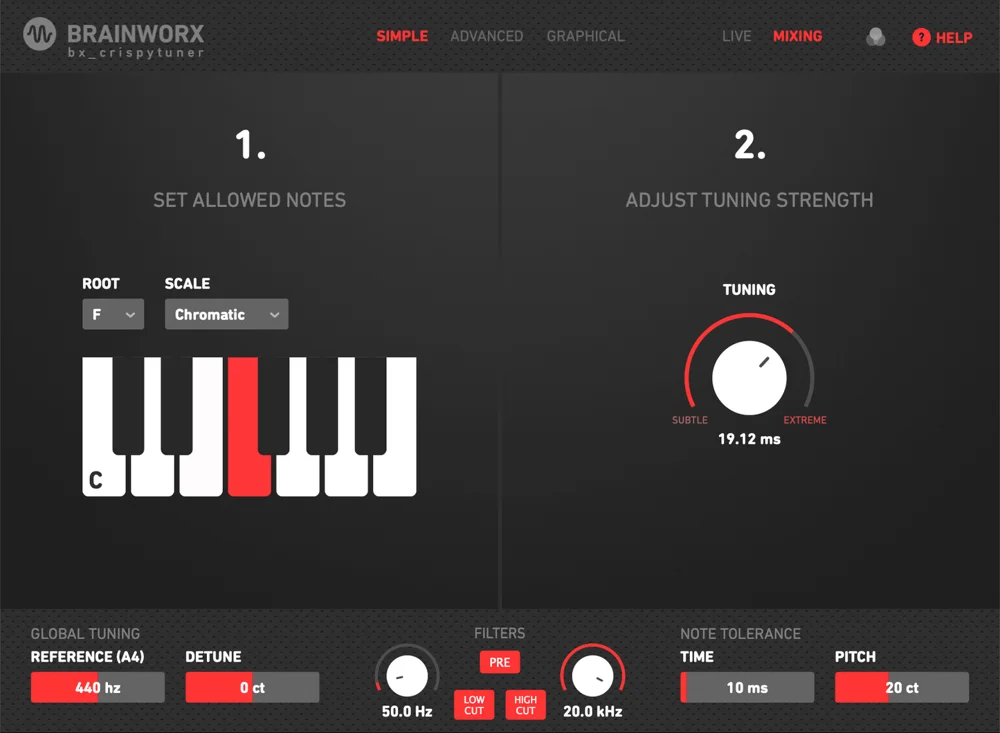
bx_crispytuner is a flexible choice if you want to start with simple automatic tuning and later make detailed edits. Simple mode asks you to choose the permitted notes and turn the tuning-strength control. Advanced mode exposes more settings, and Graphical mode lets you draw corrections and adjust individual notes.
The included bx_crispyscale helper detects a song’s key and scale and sends that information to the tuner. That is useful when you are working on a track you did not write, although you should still check the result against the music. There are also formant controls, vibrato shaping and note-transition settings for more deliberate vocal effects.
Live mode adds no plugin latency; Mixing mode is intended for the recorded workflow. The current release supports Windows 10/11 and macOS 13 or newer, including Apple Silicon, in VST2, VST3, AU and AAX Native formats where applicable. A full purchase uses Plugin Alliance activation rather than an iLok dongle, with up to three devices and an offline activation route.
Pros
- Simple, Advanced and Graphical tuning modes
- Included key-detection helper and a Live mode
Cons
- Detailed graphical work takes longer than basic automatic correction
8. Graillon 3 Free
Graillon 3 formant controls, included in the Free edition.
Graillon 3 Free is a good option for automatic vocal correction and more obvious voice-changing effects. You get pitch shifting, formant shifting and pitch correction, with controls that let you move between a firm stepped effect and gentler correction. The free edition also includes vocal compression, gating, chorus, preamp and bitcrushing effects.
There are several pitch engines, including one that retains the Graillon 2 character. In the current Graillon 3.2 release, the Inner Pitch engine is called I2. Try the engines on the actual voice rather than assuming the newest setting will suit every recording. Smooth, Inertia and the correction amount help control how strongly the tuning acts.
The Free edition is a genuine free download rather than a time-limited trial. Pitch-Tracking Modulation, per-note keyboard tuning and the vocal doubler belong to the paid Full edition. Graillon 3.2 runs in a compatible host on Windows 7 or newer, macOS 10.15 or newer, and supported Linux systems. Formats include VST2, VST3, AU, AAX, CLAP and LV2, with the available choices depending on the operating system; there is no Linux VST2 build.
Pros
- Free tuning, pitch shifting and formant controls
- Includes several useful vocal effects
Cons
- Pitch-Tracking Modulation and vocal doubling require the Full edition
9. iZotope Nectar 4 Standard
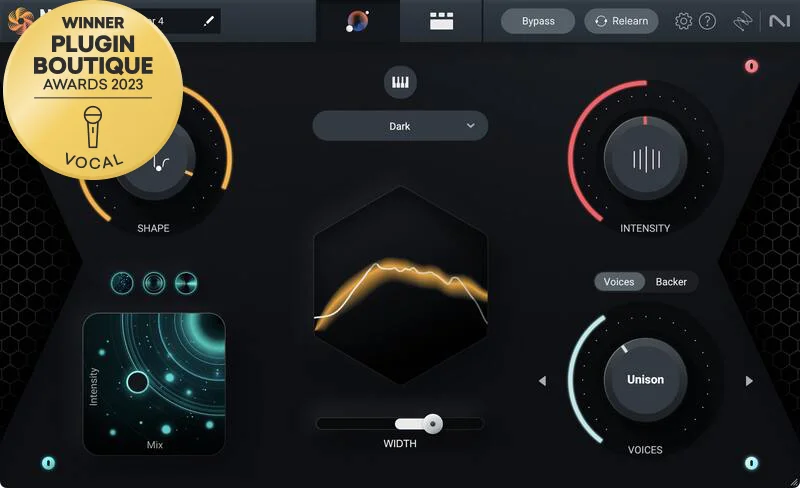
Nectar 4 Standard combines vocal pitch correction with a complete processing chain. It suits a producer who wants to tune a vocal, control its level, shape its tone and add effects within one interface. Vocal Assistant provides a starting point, while the individual modules remain available for your own adjustments.
The Voices module creates vocal layers and Backer adds a supporting vocal character. Auto-Level handles level consistency before you make further mixing decisions. Those tools make Nectar more useful as a vocal-production suite than as a replacement for a detailed note editor such as Melodyne. Standard also differs from Advanced: do not buy Standard expecting Advanced’s separate component plugins.
The linked product is a full Standard licence, not a crossgrade or an update. Authorize the serial through the iZotope installation workflow. The current Nectar 4.2 release uses 64-bit AU, AAX and VST3 formats, with Windows 10/11 and macOS Sonoma 14.7 or newer supported by iZotope. Older VST2 and lower macOS requirements shown on some shop pages do not describe the current build.
Pros
- Pitch correction and vocal mixing in one suite
- Vocal Assistant plus editable processing modules
Cons
- No detailed note-by-note pitch editor
- Separate component plugins require Advanced
10. Synchro Arts Revoice Pro 5
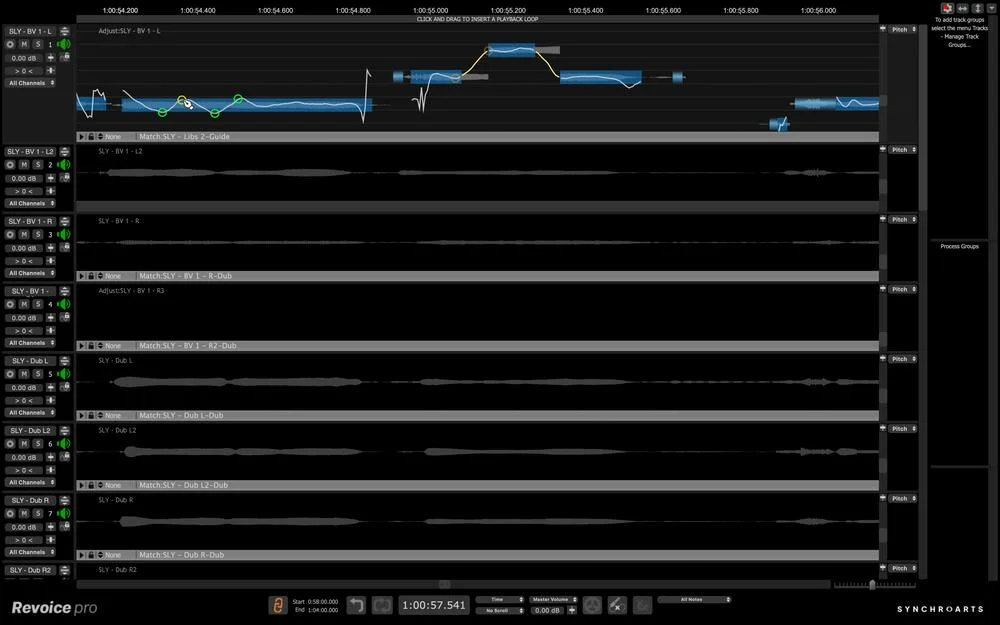
Revoice Pro 5 is the specialist option for editing and matching several recorded performances. You can adjust pitch, timing, vibrato and level in a lead vocal, then align doubles and harmonies to the performance you want to keep. It also works with monophonic instruments such as bass, brass and guitar lines, as well as dialogue.
SmartPitch and SmartAlign help separate pitch and timing decisions, while the Doubler creates additional mono or stereo parts. This is useful when a production has a well-sung lead but untidy backing layers. You still need to choose a suitable guide and listen to the result: matching every detail too closely can take the life out of a double.
Revoice Pro uses a standalone editing application with DAW link plugins, including AU, VST3 and AAX workflows where supported. It is not a live automatic tuner. The current product page lists Windows 10 or newer and macOS 10.14 or newer; check the exact DAW workflow, particularly ARA in Logic on Apple Silicon. The full perpetual licence includes two activations through Synchro Arts’ own licensing system, which replaced iLok for current builds.
Pros
- Detailed pitch and timing work across recorded vocal parts
- Useful alignment and doubling tools
Cons
- Pricey
- Standalone-and-link workflow is more involved than inserting a real-time tuner
What Does AutoTune Do?
AutoTune is Antares’ brand name; pitch correction is the broader process. A pitch-correction plugin detects the pitch of a monophonic voice or instrument and moves it toward permitted notes. Gentle settings can tidy a performance, while fast correction creates the obvious stepped effect heard in many pop and electronic productions.
For automatic tuning, start with a clean, isolated vocal and the correct key and scale. A stereo recording can still contain a single melodic voice; monophonic means one note at a time, not simply a mono audio channel. A full mix or several singers on one track gives the detector conflicting pitches.
Pitch correction cannot fix every part of a performance. It will not repair unclear words, missing expression or a poor recording. When only one phrase needs attention, editing that phrase or recording another take can work better than applying strong correction to the entire song.
Conclusion
Choose a real-time tuner when you want to hear corrected vocals during recording or create the hard-tuned effect as part of the performance. Choose Melodyne or Revoice Pro when you need to work carefully on recorded notes, timing or several vocal layers. Nectar and Waves Vocal Production make more sense when the vocal also needs a fuller mixing chain.
MAutoPitch and Graillon 3 Free are useful starting points if you are unsure which workflow you need. Try them on a clean vocal, learn how the key and correction speed affect the result, and buy more editing control only when you need it.