How to Hold Drumsticks The Right Way

The foundation of drumming is knowing how to properly hold the drum sticks. Many drummers often skip over the basics of learning how to hold their drumsticks, in favor of learning more advanced techniques. However, learning the proper placement should come first.
Many starting drummers really tend to look over and underestimate proper drumstick holding in an attempt to skip ahead straight to learning how to drum.
Every instrument has its fundamentals and with drumming, it’s proper drumstick form. We all know that without the fundamentals, it’s really hard to progress correctly and have a positive learning experience.
There are two ways to properly hold a drumstick, those are the Matched Grip and the traditional grip. Let’s dive in for more detail.
Contents
Matched Grip

The matched grip is a method where you use the same type of grip in both hands. This is very common in modern forms of drumming. It’s very easy to learn and it can have a number of distinct advantages over traditional grip for beginners (However, the traditional grip also has some great advantages).
Although I always suggest the use of a great drum teacher, the matched grip is also a great method for self-learning and correction. The symmetrical nature of this grip allows you to compare stick placement and stroke of both of your hands. You can adapt the placement of your weaker hand to your stronger one. Start around a third of the stick’s length from the butt and let it pivot between the thumb and index finger, or thumb and middle finger. Curl the remaining fingers lightly around it, leaving room for the stick to move. Try slow strokes on a pad and adjust the holding point until the rebound feels easy.
The matched grip is generally preferred if you require a lot of power out of your drumming. The left-hand matched position works well for high volume rebound, strong snare strikes, and rim shots, but the grip name alone does not prevent excess tension. Keep both hands relaxed enough to let the stick rebound, and avoid squeezing harder simply to play louder.
If you play modern genres of music then the matched grip is likely your best bet.
There are three different main versions of the matched grip. It’s very useful to learn to play with each of these as they all have their advantages.
The French Grip – your palms face each other and your strokes are mainly powered by your fingers.
The German Grip – your palms face down and your strokes are powered by your wrist.
The American Grip – places the palms at an angle between the French and German positions and is very popular because it is a very comfortable and versatile grip. All three can use fingers, wrists, and arm movement; these descriptions are starting points, not rules that lock one joint out.
Here is a great video, which explains how to hold your drumsticks using the American grip:
Here is a video explaining the German Grip. Check it out:
Here is a very useful video on how to use the French grip. It’s particularly useful to switch to this grip when playing expressive strokes on your ride cymbal.
So that’s almost everything you need to know about the different variations of the matched grip.
Be sure to practice in front of a mirror and keep conscious of maintaining good form. Check for raised shoulders, a clenched thumb, or fingers that stay rigid through the stroke. Play a few quiet, even taps with each hand before increasing speed.
Traditional Grip

The traditional grip is something quite different. It’s heavily used in jazz music and drum corps. It is a very interesting grip and can give you great subtle strokes on your snare hits at low volumes. Matched grip also works for quiet playing; either grip needs practice to control dynamics. In a common right-handed traditional setup, the right hand stays in matched grip while the left stick rests in the web between thumb and index finger, supported by the ring finger. The left stroke uses forearm rotation, with the fingers helping guide the stick.
The traditional grip is generally more difficult to learn; therefore you should try to get a good drum teacher to show you how to perform this movement correctly. It requires careful correction and subtlety. Avoid forcing the wrist into an uncomfortable position; a teacher can check the holding point, forearm rotation, and drum angle together.
Check out this great video, which shows you how to perform the traditional grip.
Improving your stick technique
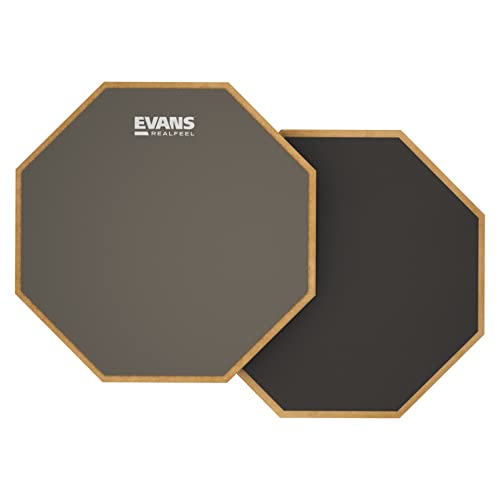
 The best way to improve your stick technique is by isolating and practicing your movements. A practice pad is a great option for this as they are quiet and can be easily packed into a bag.
The improvements to your rebounds, technique, and rudiments allow you to practice holding your drumsticks through different movements. These skills carry over to a drum kit, but the rebound changes between a pad, drumhead, and cymbal. Practice the same relaxed motion on each surface before expecting it to feel identical.
A practice pad forces you to focus on these movements, and I always recommend one as an absolutely essential item for any drummer.
Common problems with holding drumsticks
Holding your drumsticks badly can hurt your drumming in two ways:
Poor drumming efficiency
Poor technique can greatly lower your efficiency and freedom of expression while drumming. Drumsticks should be held using a method that encourages very natural and fluid movements.
Fast stick movements can be much easier to achieve when you get out of the way of your drumstick and allow the stick to naturally rebound. This can be achieved by loosening your grip and slowly learning the motion of your drum strokes using a practice pad.
Preventing chronic injuries
Holding your drumsticks badly can also lead to some serious overuse injuries of your wrist and forearms. Holding your sticks too tightly is one technique problem worth checking. This inhibits the natural rebound of the drumstick and causes excess shock to be absorbed by your joints.
Wrists are an incredibly complex part of your body. Chronic injuries can be very difficult to treat, therefore you should make every effort to ensure that you are holding your drumsticks correctly.
Choosing the correct stick grip can also help prevent injuries.
If you’re commonly feeling dull or sharp pains while drumming, you need to stop and examine your stick grip. Do not play through pain or assume that a grip change will treat it. If symptoms persist or worsen, seek advice from a healthcare professional; a drum teacher can help review your technique alongside that advice.
Conclusion
All beginner drummers should learn how to properly hold a drumstick. Also, do not mistake the use of a great drum teacher as a means to skip ahead. There is much more to drumming then just learning how to hold a drumstick, but if you never learn proper holding, everything else will be very hard to achieve.
The matched grip is the best way for beginners to go as it is the most common with many advantages. It’s also very easy to self-teach and correct with symmetrical stick placement. The French, German, and American grips are all good ways for beginners to start out on drums as each has its own distinct advantages. The Traditional grip is also a great alternative to new drummers. Try them out and find out which one best suits you.