Loopcloud Review – Features, Plugins and Subscription Plans
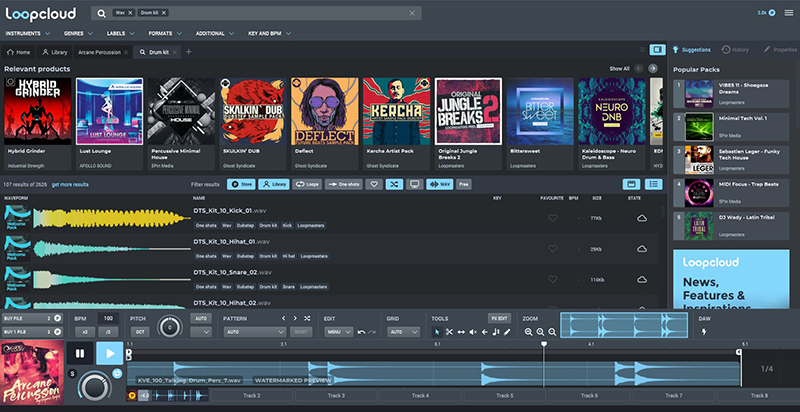
I spent a few weeks using Loopcloud for this review and was hugely impressed by it. Its DAW integration and software could dramatically change how you work with samples for the better.
We were given some free points on Loopcloud to try out the service in order to review it. However, I am giving you my honest opinion of this service after using it.
Contents
- What is Loopcloud?
- Royalty-Free Samples
- Advanced Searching
- Multi-track Sampling
- Automatically arrange samples into patterns and add effects
- Using the VST Bridge – Play Samples in Your DAW BEFORE buying them!
- Cloud Storage
- 2 Extra Plugins Included – Loopcloud Drum and Loopcloud Play
- Compatibility and Account Requirements
- How much does Loopcloud cost?
- Loopcloud vs Sample Packs
- Should You Download Loopcloud?
- Loopcloud vs Splice Sounds
- Summary
The hands-on examples and original screenshots in this review use Loopcloud 5. The current Loopcloud 7.5 keeps the sample-search and editing workflow, but its desktop app requires a subscription. Monthly plans offer a 14-day trial with 100 points; there is no ongoing free desktop tier for new users.
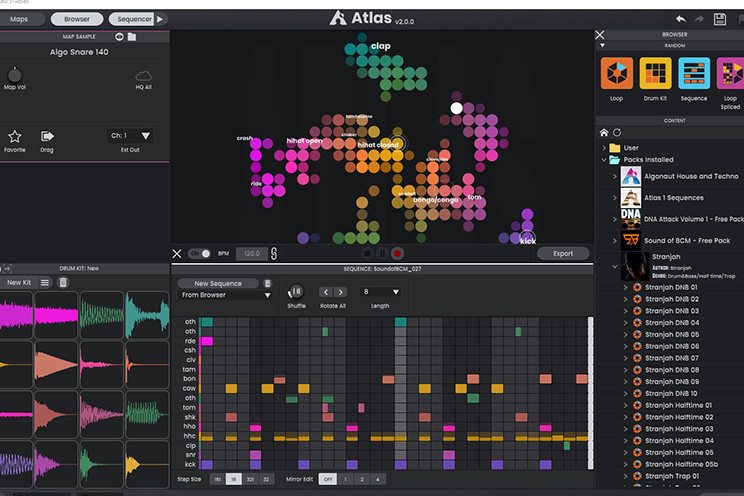
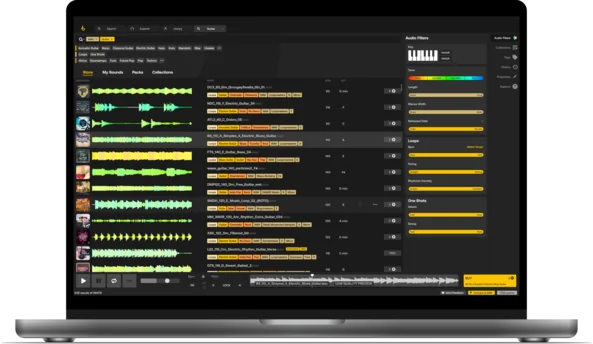
Loopcloud 7.5 adds improved Jamahook sound matching, and the updated DRUM and PLAY instruments run natively on Apple Silicon. The current desktop interface is shown here; the older screenshots below illustrate the original review examples.
What is Loopcloud?
Loopcloud is a subscription-based service that has over 5 million samples from the Loopmasters catalog. If you use Ableton Live, you might have already used a few Loopmasters samples, as they come included as ‘Packs’ when you buy the software.
Loopcloud samples can be browsed in the Mac/Windows desktop application or through the Loopcloud website. I am extremely impressed by their desktop software. It has a great workflow and is packed with features that I honestly never expected would be available.
Here is what the desktop version of Loopcloud looks like. At first look, it might seem like a complicated interface to use, but it’s quite easy to get the hang of.
After playing around with this for a few days, here are the features that I liked most:
Royalty-Free Samples
Samples that you purchase with points are royalty-free and licensed for use in your music, including commercial releases. Purchased samples remain yours to use after you cancel your subscription; the licence does not let you redistribute the raw samples as a sample pack.
Therefore, even if you stop paying for the service later, you will still have a license to use the samples that you downloaded during the life of your subscription.
Advanced Searching
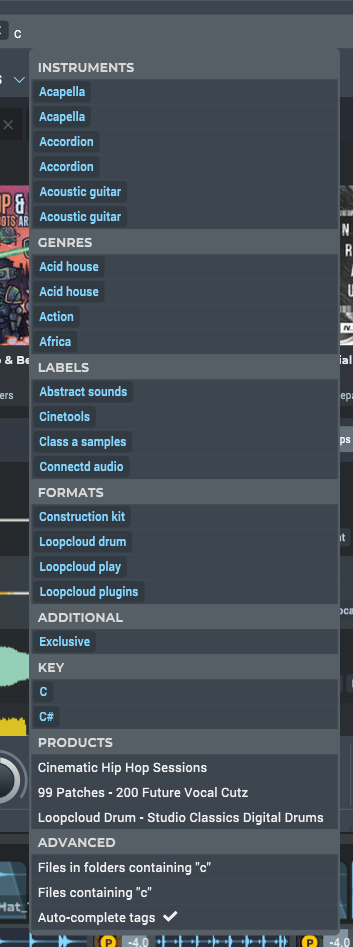
You can search for the sample you want through drop-downs that allow you to select by instrument, genre, label, formats, key, bpm, and more.
Once you get the hang of how to search samples, you can just start typing in the search box and it will allow you to chain multiple search options together very quickly.
Multi-track Sampling
Before committing to buying a sample, you can play multiple samples together. This is fantastic for checking whether a kick, bass loop and percussion part fit your track before spending points. Subscribers can use the eight-track editor to audition, arrange and process sounds together. The old two-track free version is no longer an option for new desktop users.
Automatically arrange samples into patterns and add effects
When using samples, you will often want to use them in a pattern or in conjunction with other effects such as filters, delay, and reverb.
The pattern drop-down list contains a bunch of great different options that will automatically apply your sample to many different patterns and add effects to them. An obvious example for this is drum tracks. When using a kick-sample in house music, you will often want a kick one every beat. Just selecting the ‘house kick 1’ preset will do this for you, like so:

There are many factory presets for patterns, but those are just a starting point. You can save your own patterns and apply them later.
When copying or dragging this sample into your DAW, you can choose to copy either the original sample or the processed sample (e.g. with the effects or patterns already added).
Using the VST Bridge – Play Samples in Your DAW BEFORE buying them!
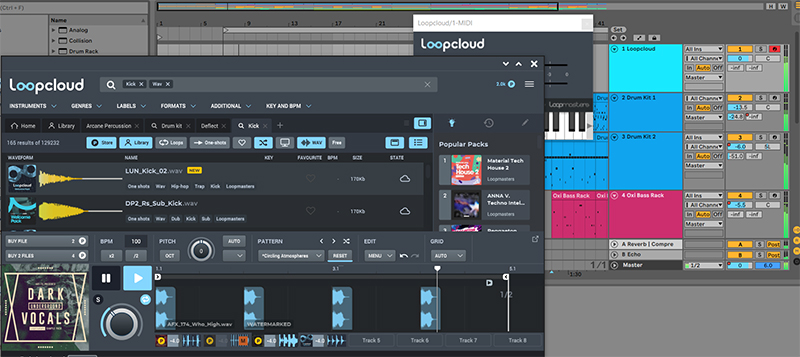
The VST Bridge is one of the best features of Loopcloud. The suite installer includes the desktop application and its Loopcloud sync plugin, which connects it to a compatible DAW. The separate Loopcloud Sounds plugin lets subscribers browse and work with samples inside the DAW without opening the desktop application. In this example, we are using Ableton Live.
- Simply drag the ‘Loopcloud’ plugin onto a MIDI track.
- Any sounds that are playing from the loopcloud software will come through to your DAW. You can then apply whatever effects you on top of them.
- Loopcloud tempo syncs with your DAW.
- If you don’t already own the sample and you decide that you want to buy them, just press ‘Buy File’ on the left-hand side of the loopcloud interface. This will deduct the cost of the sample from your points balance. When the file is downloaded, you can drag and drop the samples into your DAW or you can copy and paste it in.
- You can choose to copy either the original sample or the processed sample. For example, if you applied a pattern to the sample that you liked, then you can copy the sample into your DAW with the pattern already applied. This is another great feature!
Cloud Storage
If you have a lot of samples in your hard drive, you know that they can quickly start eating up space. For the majority of the time, this space is not used, because you only need to use a few samples at a time.
If you are producing in a place that has a good internet connection, then storing your samples through Loopcloud’s cloud-based storage is a nice option. Artist includes 5GB of cloud storage, Studio includes 50GB, and Professional includes 250GB. These are storage capacities, rather than a fresh storage allowance each month.
Once you have uploaded your own samples to cloud storage, you can access your library through your account and compatible computers. If you cancel, back up your own uploaded files: Loopcloud says cloud-stored files may be deleted after 90 days. Purchased sounds and your personal cloud uploads have different retention rules.
2 Extra Plugins Included – Loopcloud Drum and Loopcloud Play
Loopcloud Drum is a nice drum rack sampling plugin with a lot of features. The current subscription and trial include DRUM and PLAY, with starter sounds and additional expansions available separately. A DRUM kit expansion adds sounds for the instrument; it is not the complete plugin suite.
If you are bored with the stock drum racks in your DAW, or if you want a different approach to programming drums into your productions, then this is a great one to check out.
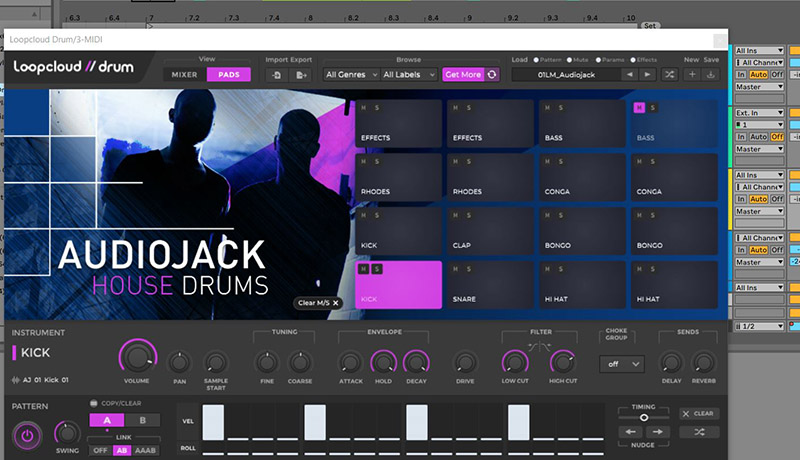
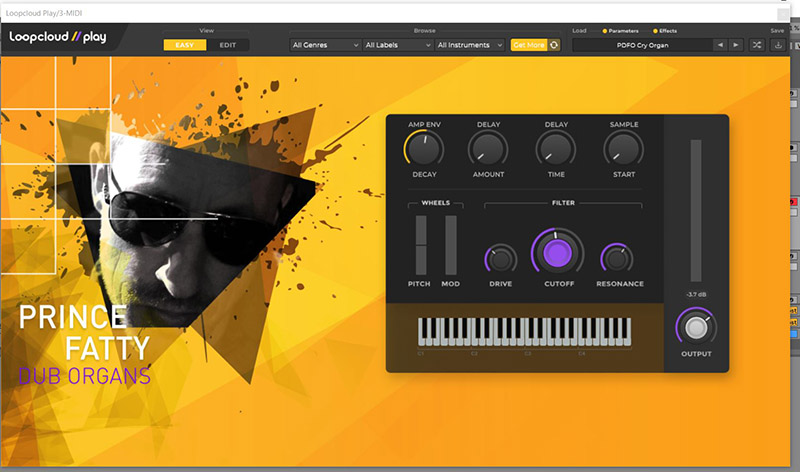
Loopcloud play is a plugin that plays a wide variety of virtual instruments available on Loopcloud (such as basses, keys, strings). It includes starter content, with more instruments and expansions available through Loopcloud. Both DRUM and PLAY need a compatible plugin host; the main Loopcloud desktop application can run on its own.
Compatibility and Account Requirements
The desktop application and the plugins have separate requirements. The suite installer lists 64-bit macOS 10.13 or later and Windows 8.1 or later for the desktop application and Sounds plugin. DRUM and PLAY list macOS 10.15 or later and Windows 10 or later. Use the current installer for native Apple Silicon support in DRUM and PLAY.
The desktop sync plugin supports AU, VST3 and AAX on Mac, and VST3 and AAX on Windows. Loopcloud Sounds supports VST, VST3, AU and AAX where the platform allows them. DRUM and PLAY use VST, VST3 and AU in a compatible DAW; they are not AAX instruments. Check which component you need before choosing a format.
Sign in with your Loopmasters/Loopcloud account and connect to the internet to set up the software, search the store and download purchases. Already downloaded audio files can be used in your DAW independently of the subscription. Legacy customers who bought DRUM or PLAY through Plugin Boutique have a separate desktop-access exception; that is not a free desktop entitlement for every new account.
How much does Loopcloud cost?
You can create an account without paying, but ongoing use of the current desktop app requires an active subscription. The monthly plans have a 14-day trial with 100 points, followed by recurring billing unless you cancel.
There are three plans: Artist, Studio and Professional. Their monthly subscriptions include 100, 300 and 600 points respectively. Annual plans provide 1,200, 3,600 and 7,200 points per year. Choose mainly by how many sounds you expect to buy and how much cloud storage you need; the core eight-track editor and plugin suite are included across the plans.
Do not sign up expecting the old permanent free plan or a daily free-download allowance without a subscription. The trial is a limited way to try the subscriber tools, rather than a separate free edition.
You can buy top-up points with an active subscription. Unused points roll over while subscribed; after cancellation they are frozen until you resubscribe, rather than remaining available to spend immediately.
Loopcloud vs Sample Packs
Loopcloud is different from standard sample packs because you only download the samples that you need.
Oftentimes, you might only use a sample or two from an entire pack. The rest of it is just wasted space or a waste of money. With loopcloud subscription plans, you get a certain amount of points to use per month.
You can mix and match sounds from different sample packs, audition and apply effects to them before committing to buying them. You can also hear and process the sounds in your current DAW projects before buying them!
Should You Download Loopcloud?
I have been very impressed by the features and options within Loopcloud. I have used many other music sampling services before, so I had some pretty standard expectations before using Loopcloud. However, the value that its software brings took me by surprise.
If you regularly build tracks from samples and want to audition layers in context, the monthly trial is a useful way to test the workflow. If you only need an occasional complete pack, buying that pack outright may suit you better than keeping a subscription.
Loopcloud vs Splice Sounds
Loopcloud and Splice Sounds both offer great cloud-based sample libraries. I have used both. However, in my opinion, Loopcloud’s software really allows you to bring your sample selection and processing right into the creative process (e.g. through the VST bridge, and through its multi-track sample playing). For that reason, I personally prefer Loopmasters.
Summary
The part I liked most was hearing samples together in the DAW before buying them. Loopcloud is worth considering if you want that workflow alongside a large sample library. Monthly plans offer a 14-day trial with 100 points through the website.